


Anthropic CEO Dario Amodei Says OpenAI Models Are Not the Problem Chinese AI Is
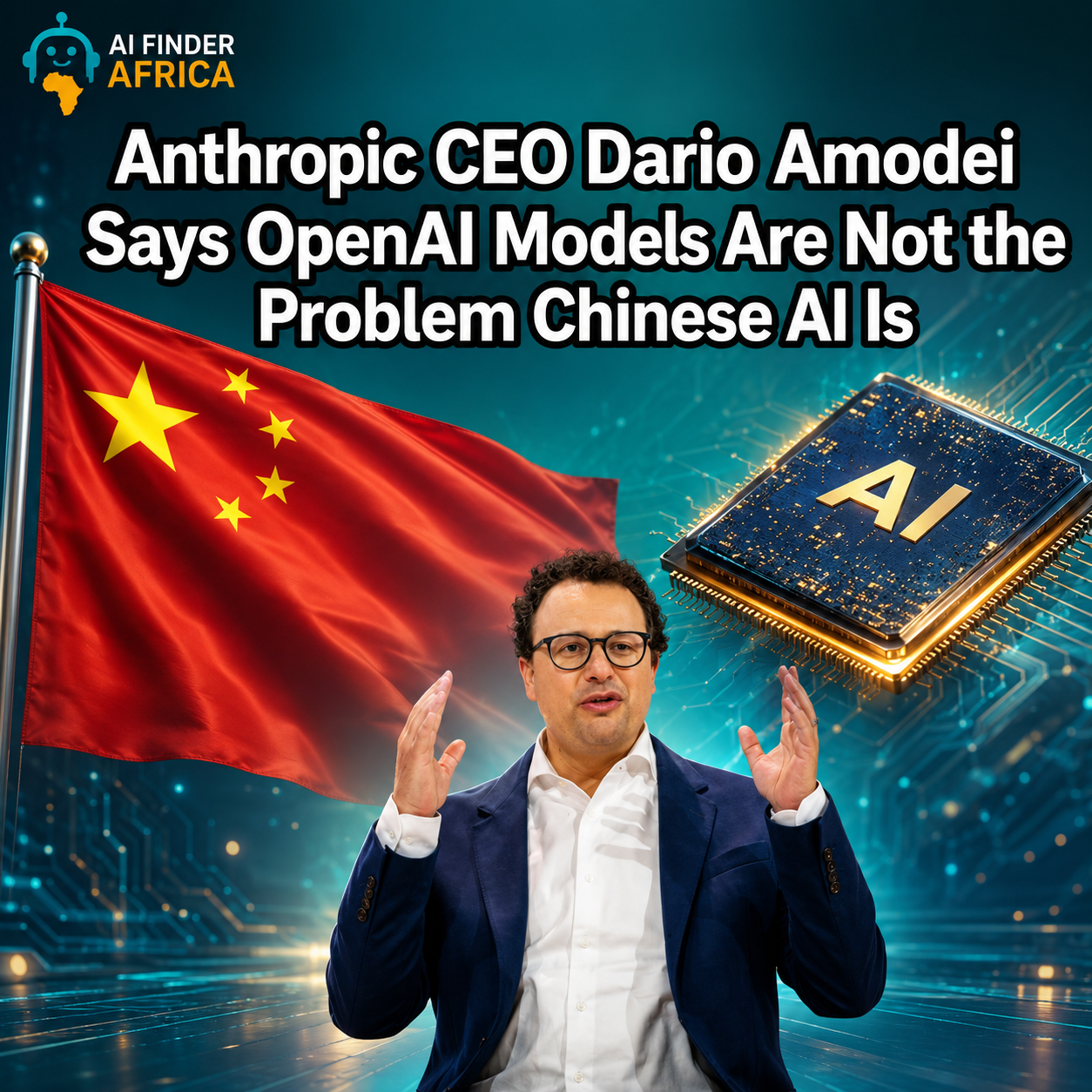
Anthropic CEO Dario Amodei Says OpenAI Models Are Not the Problem Chinese AI Is
For the past few days, one question has dominated conversations in the AI industry: Is Anthropic trying to stop OpenAI models?
The speculation spread quickly after nearly every major AI company, including Nvidia, Microsoft, Meta, Hugging Face, Mistral, and others, signed a public letter urging governments not to impose sweeping restrictions on open-weight AI models.
One notable name was missing from that list.
Anthropic.
That silence sparked rumors that the company behind Claude wanted governments to crack down on OpenAI models, especially those coming from China.
Now, Anthropic CEO Dario Amodei has responded directly, and his answer may surprise many people.
"We Never Asked for a Ban"
In a detailed blog post, Amodei made one point crystal clear:
Anthropic has never advocated banning open-weight AI models.
Open-weight models are AI systems whose trained model weights are publicly available, allowing developers and researchers to run, customize, or fine-tune them on their own infrastructure. Some of today's most influential AI models follow this approach because it encourages innovation, research, and transparency.
According to Amodei, these models can be a public good provided they do not possess dangerous capabilities. That means Anthropic is not opposed to openness itself.
Instead, the company's concerns lie elsewhere.
The Real Concern Is Not Open AI
Amodei says his biggest worry is not that developers can download AI models. His concern is who ultimately builds the world's most powerful AI and how it might be used.
He specifically warned that authoritarian governments could develop frontier AI systems capable of strengthening military power, expanding surveillance, or enabling large-scale repression. While he noted that multiple authoritarian regimes pose risks, he described China as the most capable competitor in this area.
This is a very different argument from simply saying, "Ban Chinese AI."
Instead, Amodei argues that governments should focus on protecting the technologies that make advanced AI possible.
Why China Keeps Appearing in the AI Conversation
The debate is not happening in a vacuum.
Chinese AI companies have made enormous progress over the past year. Several open-weight models now rival leading American systems while costing significantly less to run, putting pressure on companies like OpenAI, Anthropic, and Google.
Some U.S. companies and policymakers also allege that certain Chinese AI labs have benefited from model distillation, a technique where one AI model is queried extensively to reproduce aspects of another model's behavior. Whether this constitutes intellectual property theft remains a subject of legal and technical debate, but it has become a central issue in U.S.-China AI policy discussions.
Rather than banning open models, Amodei says efforts should target industrial-scale misuse of distillation and restrict access to the most advanced AI chips.
Another Threat: Biology, Not Just Cybersecurity
One of the more striking parts of Amodei's statement wasn't about China at all. It was about biology.
He argued that future AI systems could lower the barriers to creating biological threats, making biosecurity an even greater long-term concern than cybersecurity.
Because open-weight models can be downloaded and modified without centralized oversight, Anthropic believes that sufficiently powerful models require stronger safety evaluations before widespread deployment.
Supporters of open AI disagree. Many argue that open models actually improve security because researchers worldwide can inspect them, identify weaknesses, and build defenses more quickly.
That disagreement has become one of the defining debates shaping the future of artificial intelligence.
Amodei Wants Global AI Safety Testing
Instead of blanket bans, Amodei proposed something much broader.
He supports creating an international AI safety testing framework where sufficiently capable AI models, whether open or closed, American or Chinese, would undergo standardized safety evaluations before deployment.
He acknowledged that such a system would only work if countries around the world, including China, participated. While that may sound ambitious, he suggested there could be common ground on issues like preventing AI from being used to enable biological weapons.
Why This Matters
This is not just another disagreement between tech executives. It highlights a deeper divide over how the AI industry should evolve.
One side believes powerful AI should become more open so innovation spreads faster. The other believes openness becomes increasingly risky as AI grows more capable.
Anthropic is trying to position itself somewhere in the middle. The company says it's not against open-weight AI. It simply believes the world's most powerful AI systems deserve stronger safeguards, tighter controls on advanced computing hardware, and international oversight.
Final Thoughts
As AI becomes more powerful, the debate is shifting beyond model performance and benchmark scores.
The biggest questions are becoming geopolitical.
Who should control frontier AI?
How open should these systems be?
And how do governments encourage innovation without creating new security risks?
For now, Dario Amodei's message is straightforward: do not ban open AI models, but do not ignore the strategic risks either. As the race between the United States and China accelerates, that balancing act may prove to be one of the defining technology challenges of the decade.


 Explore