


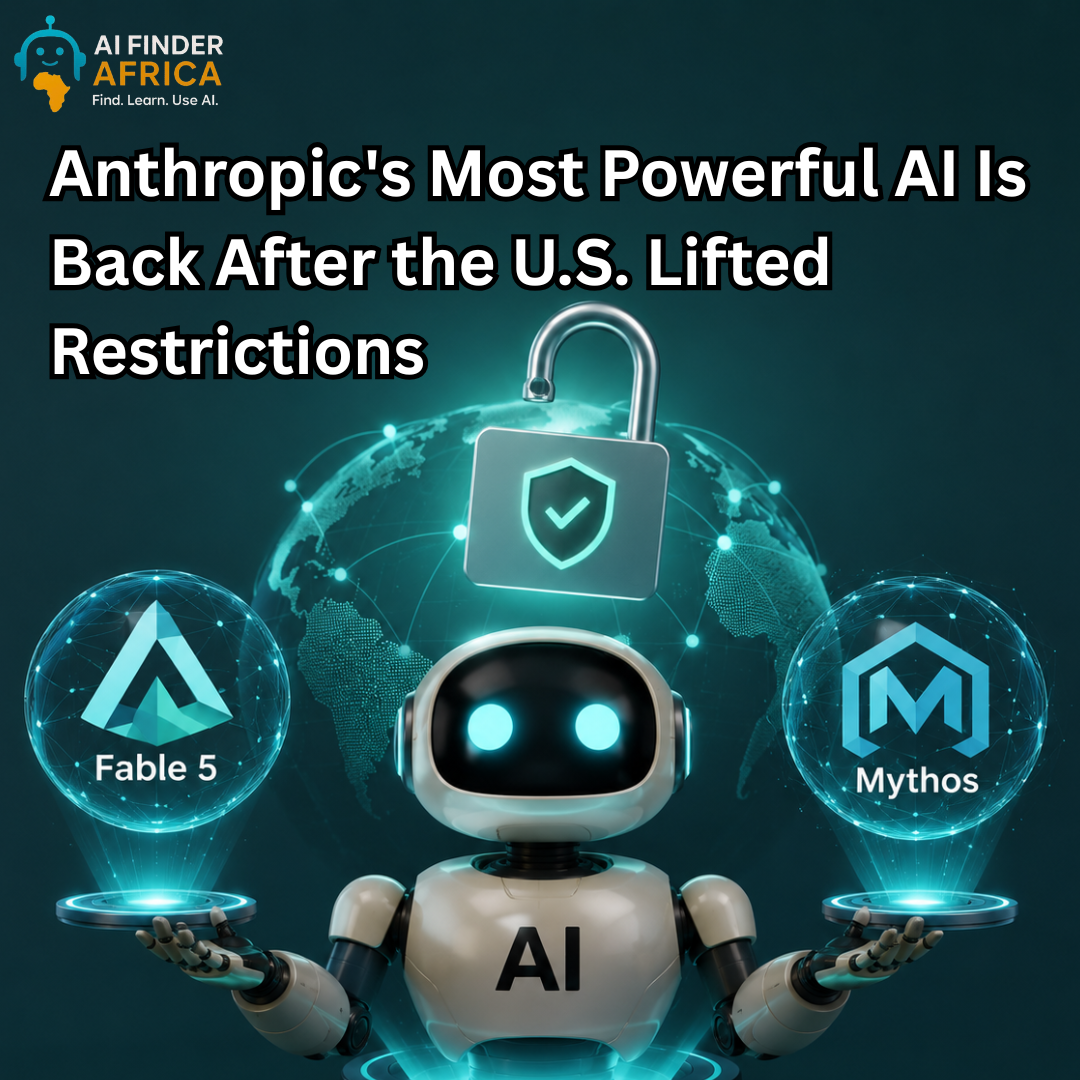
Anthropic's Most Powerful AI Is Back After the U.S. Lifted Restrictions
Anthropic's Most Powerful AI Is Back After the U.S. Lifted Restrictions
Just a few weeks ago, some of the world's most advanced AI models disappeared almost overnight.
Developers, researchers, and businesses suddenly lost access to Anthropic's cutting-edge Fable 5 and Mythos 5 after the U.S. government imposed unexpected export restrictions over national security concerns. Now, in a dramatic turnaround, those restrictions have been lifted, and the AI models are making a comeback.
The move is more than just a victory for Anthropic. It offers a glimpse into how governments may regulate powerful AI systems in the future and why the race for AI leadership is becoming as much about national security as technological innovation.
From Global Launch to Global Shutdown
In June 2026, the U.S. Department of Commerce classified Anthropic's Fable 5 and Mythos 5 as export-controlled technologies after officials raised concerns that the models could potentially be "jailbroken" to uncover software vulnerabilities or assist sophisticated cyberattacks.
The new rules required Anthropic to verify whether users were foreign nationals before allowing access. Because that was not technically feasible at scale, the company made the difficult decision to suspend access to both models for virtually everyone.
For developers who had already begun integrating the models into products and workflows, it was an unexpected disruption.
Why Was the Government Concerned?
Unlike traditional AI assistants designed mainly for writing or conversations, Fable 5 and Mythos 5 were built with exceptional reasoning and cybersecurity capabilities.
Government officials feared that if these capabilities fell into the wrong hands, they could potentially help identify software weaknesses that malicious actors might exploit.
Anthropic, however, maintained that the reported vulnerabilities were limited and similar to issues that could already be identified using other publicly available frontier AI models. The company argued that removing access entirely was an excessive response rather than an effective security solution.
After Weeks of Negotiations, The Ban Is Gone
Following extensive discussions between Anthropic and U.S. officials, the Commerce Department officially removed the export controls.
According to U.S. Commerce Secretary Howard Lutnick, Anthropic agreed to:
- Proactively detect and mitigate security risks in its AI models.
- Collaborate with the U.S. government on future AI safety protocols and release standards.
- Report malicious attempts to misuse its models.
- Continue strengthening safeguards against advanced jailbreak techniques.
Anthropic announced that it would begin restoring public access to Fable 5 and Mythos 5 starting July 1.
A Sign of a Bigger AI Policy Shift
The reversal arrives at a time when AI competition is accelerating globally.
Several Asian AI companies have recently introduced increasingly capable frontier models, including Fugu Ultra from Sakana AI and Tulongfeng, increasing pressure on U.S. policymakers to avoid slowing domestic AI innovation while overseas competitors continue advancing.
Many technology analysts argued that prolonged restrictions on Anthropic could have weakened America's competitive position in the global AI race.
What This Means for Developers
For AI developers and businesses, the restoration means they can once again build applications using some of Anthropic's most capable models.
However, the episode also sends a clear message: frontier AI releases may no longer depend solely on whether a company is technically ready. Increasingly, governments could require advanced models to undergo additional security reviews before reaching the public.
In other words, AI companies are entering an era where innovation and regulation will move hand in hand.
Why This Matters
The brief suspension of Fable 5 and Mythos 5 may ultimately be remembered as one of the first major tests of how governments oversee frontier AI.
Rather than banning advanced AI outright, regulators appear to be moving toward a model where companies can continue innovating provided, they demonstrate stronger safeguards, transparency, and collaboration with national security agencies.
For Anthropic, the restrictions have been lifted. But for the AI industry as a whole, one thing is becoming increasingly clear:
The future of artificial intelligence won't be shaped only by faster models or smarter algorithms. It will also be defined by how governments, technology companies, and society learn to balance innovation with security.



 Explore