


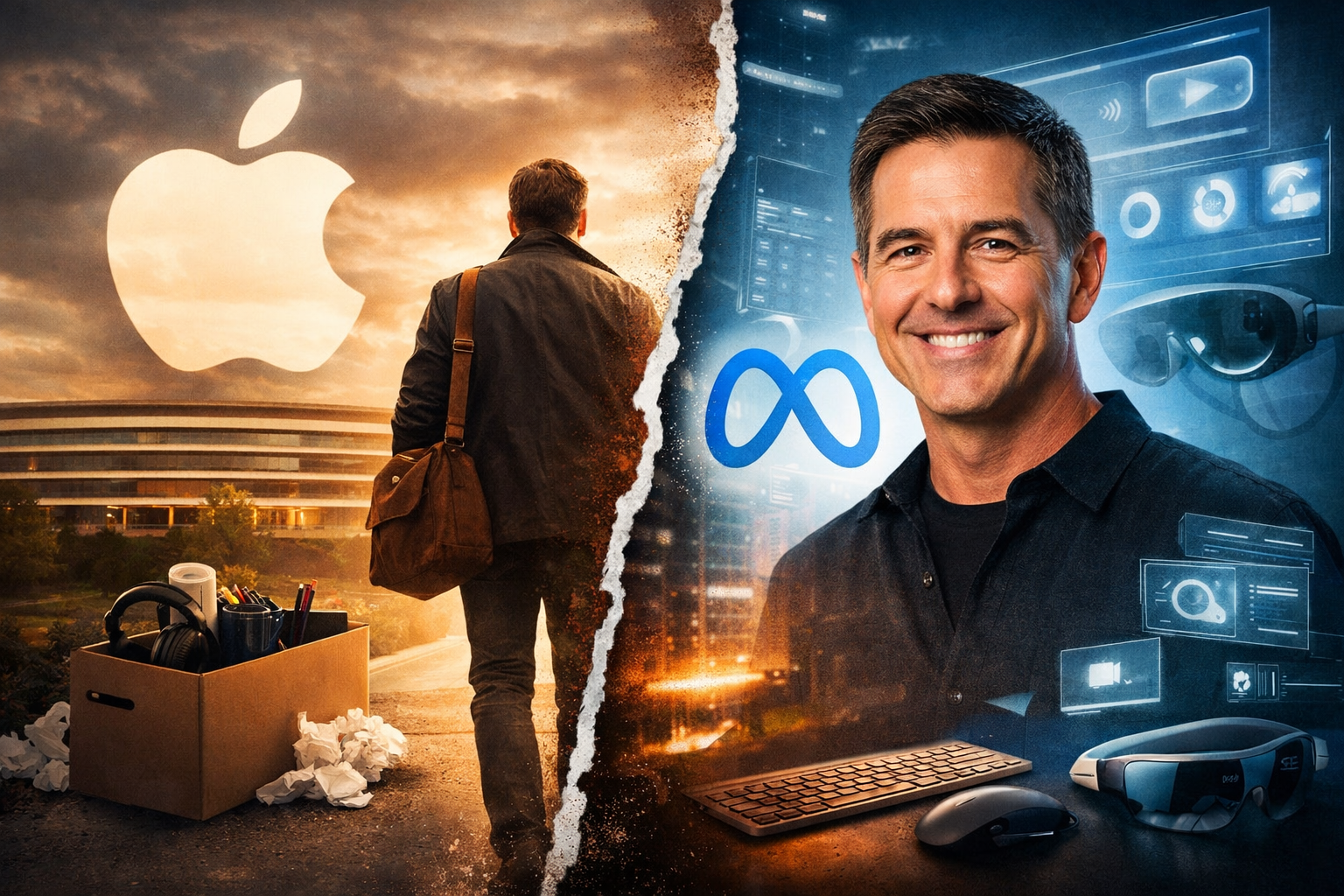
Apple’s Design Uproar: Why a Top Designer Leaving for Meta Matters
Something unusual rippled through tech circles late in 2025. When Apple pushed its new iOS 26 software with a bold “Liquid Glass” interface, people expected mixed reactions, but not a leadership earthquake. Yet that’s exactly what happened.
Behind the scenes, Apple quietly lost one of its most influential design leaders, Alan Dye, the vice president of Human Interface Design, to Meta. And the reactions were louder than any Apple keynote.
The Rise and Fall of Liquid Glass
Apple’s Liquid Glass update was meant to be the biggest visual overhaul in years. A shimmering, translucent design language that stretched across iOS, iPadOS, macOS, watchOS, and more.
But as people actually used it, not everyone loved it. Some users and commentators found the transparency effects harder to read and less intuitive than past designs. On social platforms, opinions ranged from admiration of its beauty to outright frustration with its usability.
A Quiet Departure Becomes a Loud Story
In December 2025, Apple confirmed that Alan Dye would be leaving the company to join Meta. He’s set to lead a new design effort there, focusing on hardware, software, and AI-driven interfaces, a crucial part of Meta’s push into smart devices, AI, and immersive experiences.
Why This Isn’t Just “Another Departure”
Design leadership at Apple isn’t like most companies. Since the days of Jony Ive, interface design has defined Apple's user experience. Dye helped shape Liquid Glass, Vision Pro interfaces, and many of the gestures and visuals users have come to know across iPhones and Macs.
So when someone who is responsible for those decisions exits and joins a rival, it is noteworthy.
Two Paths, One Big Contrast
The situation highlights something bigger than a personnel change: the contrast in design philosophy between two tech giants.
At Apple, clarity and usability have been core values. Recent internal reactions suggest teams are relieved to see a shift back toward grounded usability over dramatic visuals.
At Meta, experimentation and broad visual language play bigger roles, especially in new platforms like VR headsets, AI devices, and smart glasses. Dye’s skills fit an environment that thrives on bold visuals and complex interaction layers.
The Real Story Isn’t Just a Job Change
This isn’t just about a designer switching companies; it is about what happens when two distinct visions of computing collide.
Apple’s strength has always been in seamless simplicity. Meta’s future bets lean into immersive AI experiences and rich visual worlds.
Alan Dye’s move is, in many ways, the perfect symbol of that divergence.
And as these two paths unfold, the next chapter of design in computing on phones, watches, headsets and beyond might look very different from either company’s last decade.




 Explore