


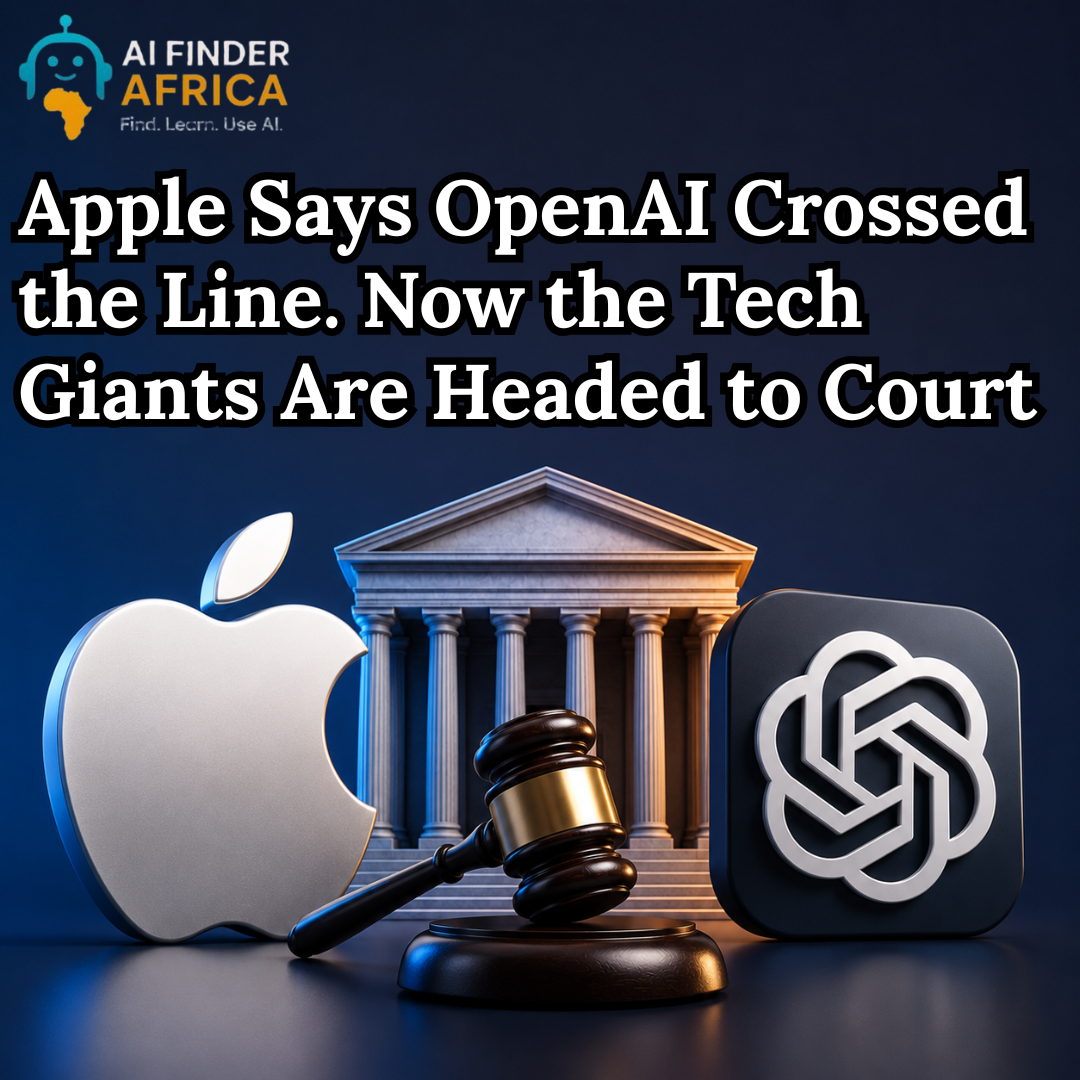
Apple Says OpenAI Crossed the Line. Now the Tech Giants Are Headed to Court
Apple Says OpenAI Crossed the Line. Now the Tech Giants Are Headed to Court
For years, Apple and OpenAI were seen as unlikely partners in the AI revolution. Apple integrated ChatGPT into its ecosystem, while OpenAI focused on building the world's most advanced AI models.
Now, that relationship has taken a dramatic turn.
Apple has filed a blockbuster lawsuit against OpenAI, accusing the AI giant of systematically stealing confidential hardware secrets to accelerate its own AI device ambitions. If the allegations are proven in court, this could become one of the biggest intellectual property battles the tech industry has seen in years.
But what exactly happened, and why is everyone talking about it?
The Lawsuit That No One Saw Coming
Apple alleges that OpenAI did not simply hire former Apple engineers it claims the company encouraged them to bring confidential information about unreleased products, manufacturing processes, supplier relationships, prototypes, and internal engineering documents.
According to Apple's complaint, this was not the work of a few rogue employees. Instead, Apple describes what it calls a coordinated pattern of misconduct involving current OpenAI staff, former Apple employees, and members of OpenAI's hardware leadership.
Among those named in the lawsuit are Tang Tan, OpenAI's Chief Hardware Officer and a longtime former Apple executive, along with former Apple engineer Chang Liu.
Apple claims these individuals accessed or requested confidential information after leaving the company and used it to support OpenAI's growing hardware division.
OpenAI, however, strongly rejects the allegations.
The company says it is "not aware of any evidence that this complaint has merit" and maintains that it has no interest in using another company's trade secrets.
Why This Matters More Than a Typical Lawsuit
At first glance, this may seem like another Silicon Valley legal dispute.
It is much bigger than that.
OpenAI is no longer just an AI software company. Over the past year, it has expanded aggressively into hardware after acquiring io, the startup co-founded by legendary Apple designer Jony Ive.
Industry insiders expect OpenAI to launch its first consumer AI hardware product within the next couple of years, with speculation ranging from an AI companion device to entirely new computing experiences beyond today's smartphones.
If Apple's claims hold up in court, the lawsuit could significantly slow that roadmap.
Legal experts say trade secret cases often involve lengthy discovery processes, document reviews, and potential injunctions that can delay product development even before a final verdict is reached.
More Than 400 Apple Employees Now Work at OpenAI
One detail from Apple's filing has raised eyebrows across the tech industry.
The company says more than 400 former Apple employees now work at OpenAI.
Employee movement between major tech companies is not unusual. Engineers frequently move between Apple, Google, Microsoft, Meta, and startups.
What makes this case different is Apple's allegation that some former employees carried confidential knowledge and, in some cases, proprietary materials into OpenAI's hardware operation.
Whether those claims can be proven remains to be seen.
OpenAI's Hardware Dreams Face Their Biggest Test
This lawsuit arrives at a critical moment for OpenAI.
The company is investing billions of dollars into becoming more than just the creator of ChatGPT.
Its long-term vision includes AI-first hardware designed from the ground up rather than simply running AI software on existing phones and laptops.
That vision has attracted enormous excitement but also enormous scrutiny.
If the court sides with Apple, OpenAI could face financial penalties, restrictions on certain hardware projects, or changes to how its hardware division operates.
If OpenAI successfully defends itself, it could clear one of the biggest legal obstacles standing in the way of its next major product launch.
What Happens Next?
The legal battle is only beginning.
Apple is seeking damages, the return of any allegedly confidential materials, and court orders preventing OpenAI from using its trade secrets in future hardware development.
OpenAI has denied wrongdoing and says it will defend itself in court.
For now, no judge has ruled on the allegations, and the claims remain unproven.
But one thing is already clear: this case could shape not only the future of OpenAI's hardware ambitions but also how aggressively AI companies recruit talent from their biggest rivals.
As the race to build the next generation of AI devices accelerates, protecting innovation may become just as important as creating it.
Final Thoughts
The AI race has entered a new phase.
It is no longer just about building smarter models. It is about who will build the devices we use to interact with them.
Apple believes OpenAI crossed a line.
OpenAI insists it didn't.
The courts will ultimately decide who's right, but regardless of the outcome, this lawsuit is already becoming one of the defining legal battles of the AI era.


 Explore