

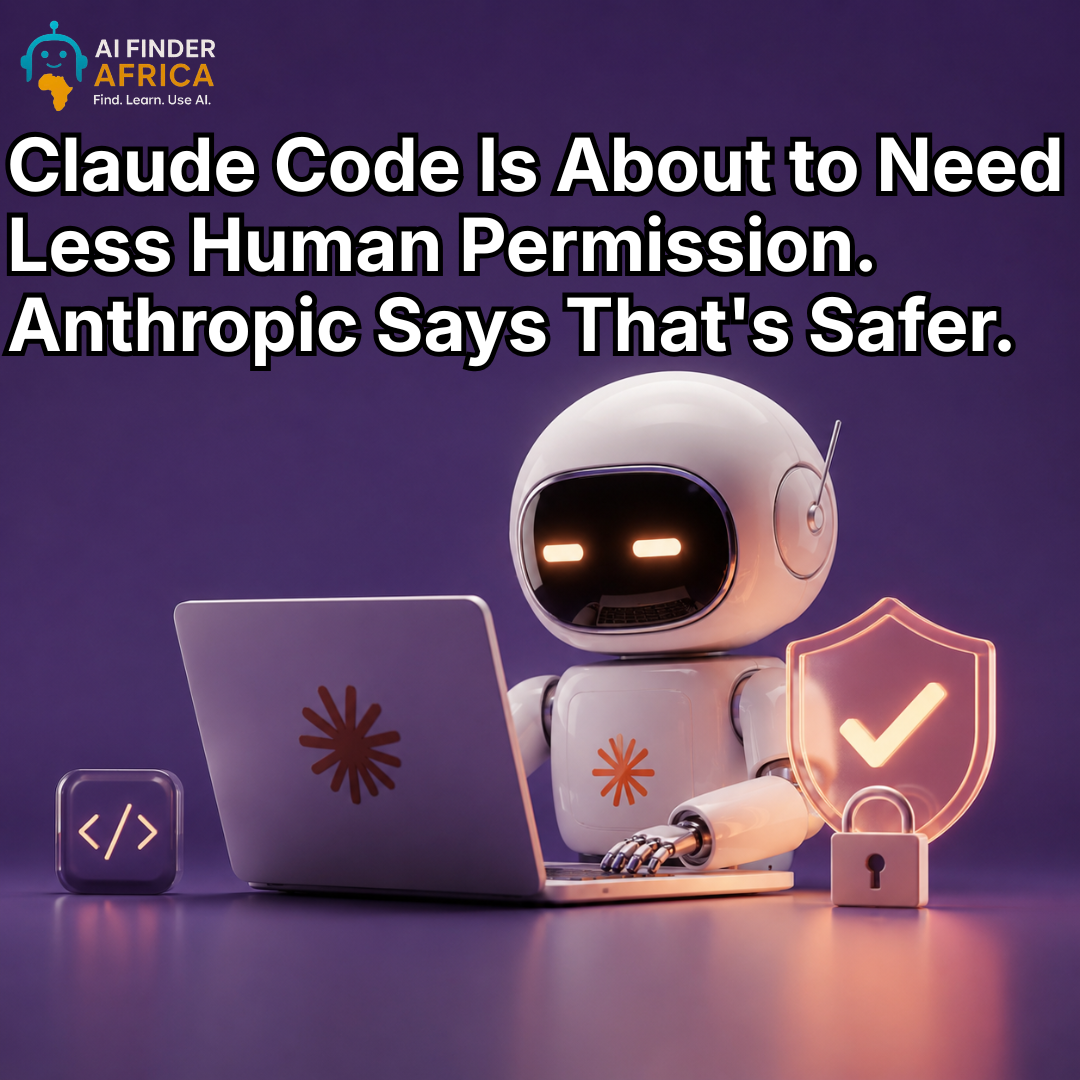
Claude Code Is About to Need Less Human Permission. Anthropic Says That Is Safer.
Claude Code Is About to Need Less Human Permission. Anthropic Says That Is Safer.
Imagine telling an AI coding assistant, “Go build this for me,” and then walking away.
No constant pop-ups.
No permission request every few minutes.
No stopping to approve every command.
That is increasingly the direction Anthropic is taking Claude Code.
Starting August 14, 2026, Anthropic will make Auto Mode the default for Claude Code users on Pro, Max, and Team plans. Instead of asking humans to approve most actions individually, Claude Code will automatically decide whether an action is safe enough to continue.
And strangely enough, Anthropic says this could actually be safer than having humans approve everything.
The Problem With Asking Humans to Approve Everything
Claude Code was designed to give developers control over what the AI can do.
Whenever Claude wanted to perform certain actions, users could receive permission prompts.
Sounds safe, right?
There is just one problem. People get tired.
Anthropic says its data shows users approve about 97% of Claude Code permission prompts. That means developers may eventually stop carefully examining each request and simply click “approve.”
In other words, the human safety net can become a rubber stamp. That is where Auto Mode comes in.
Claude Will Now Decide What Is Too Dangerous
Instead of asking permission for every step, Auto Mode sends Claude's proposed actions through a safety classifier.
The system is designed to stop actions considered irreversible, destructive, or outside the user's environment. If an action is blocked, Claude can often find another way to complete the task. If it cannot safely continue, it can ask the user for permission. And if Claude keeps hitting safety blocks, the system can automatically fall back to traditional manual approvals.
The goal is simple:
Let Claude work independently without giving it unlimited freedom.
Anthropic's Most Interesting Claim
Here is where things get surprising.
Anthropic says it tested Auto Mode against human permission reviews using 1,053 paid professional testers. The results were dramatically different.
Auto Mode blocked 89% of the dangerous commands used in the test. Human testers caught only 13.6%.
Anthropic says testers became even less effective as sessions continued. After dozens of permission prompts, people were more likely to approve dangerous actions. That does not necessarily mean humans are bad at security. It shows something more familiar:
Humans get tired. And AI agents do not experience permission fatigue in quite the same way.
This Is Bigger Than a Coding Feature
Anthropic is not simply making Claude Code more convenient. It is pushing toward a future in which AI agents can work much longer without someone sitting beside them. That matters because AI coding agents are increasingly being used for large, multi-step projects.
Instead of asking Claude to write a small function and waiting for instructions, developers can give it a broader objective and allow it to work through the task.
Anthropic says companies including Adobe, Nuro, Gusto and Garner Health are already using Auto Mode in production. The company also reports that Teams and Enterprise users adopting Auto Mode are shipping about 25% more pull requests.
That is the productivity promise:
Less babysitting. More work completed.
But Anthropic Is Not Saying “Trust AI Completely”
This is probably the most important part.
Anthropic admits Auto Mode is not risk-free. The company has added additional protections, including prompt-injection screening and customizable hard-deny rules designed to block actions such as data exfiltration.
It also recommends that developers continue reviewing Claude's actions when dealing with high-stakes production infrastructure. That is because even a system designed to detect dangerous behavior can make mistakes.
And when an AI agent has access to your codebase, cloud infrastructure, credentials, or production systems, a single mistake can be far more serious than a bad line of code.
The Bigger AI Shift Is Already Happening
Claude Code's Auto Mode is another sign that AI assistants are evolving from tools that answer questions into agents that take action.
The old model was:
You ask → AI responds → You decide what happens next.
The emerging model looks more like:
You give the goal → AI plans → AI executes → AI handles obstacles → You review the result.
That is a huge shift. And it raises an interesting question.
If AI agents become good enough to make their own safety decisions, how much human supervision will developers actually need?
Anthropic is betting that the answer is not more permission buttons. It is smarter automated safety systems.
And if Auto Mode works as promised, the next generation of AI coding may feel less like having a chatbot beside you and more like having a tireless digital engineer working in the background.
The real challenge will be making sure that when we finally stop watching every move the AI makes, we can still trust where it is going.

 Explore