


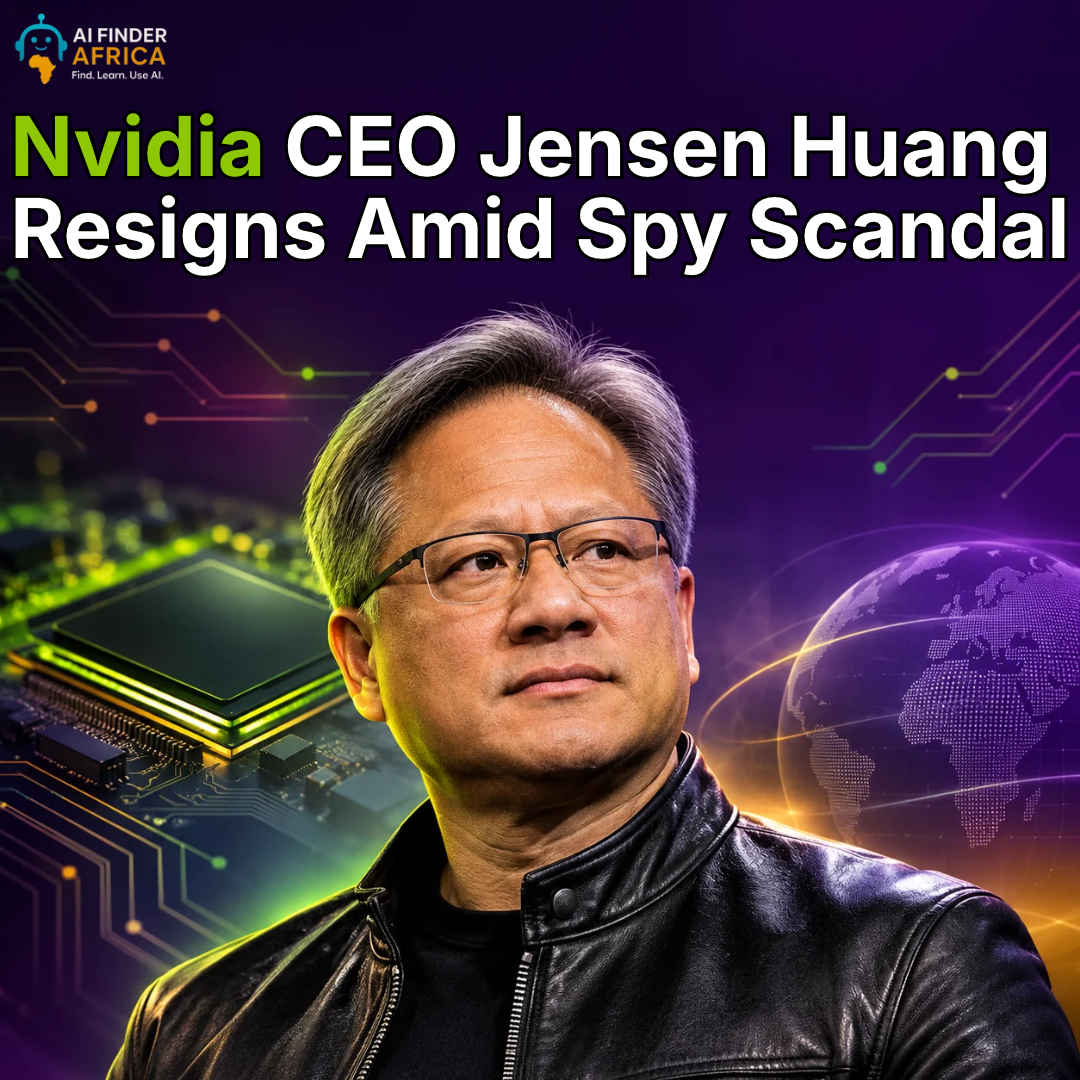
Nvidia CEO Jensen Huang Resigns Amid Spy Scandal
Nvidia CEO Jensen Huang Resigns Amid Spy Scandal
On Thursday, November 12, 2026, Nvidia confirmed that Jensen Huang had stepped down as its president, CEO, and board member, effective immediately.
The announcement came after days of intense media attention surrounding his personal relationships and a growing investigation involving a Chinese businesswoman identified as Alice Huang.
For a man who had led Nvidia for more than three decades, the sudden departure marks an extraordinary turning point. Huang co-founded Nvidia in 1993 and helped transform it from a graphics chip company into the technology powerhouse supplying the processors behind much of today's AI revolution. But his leadership has now ended under circumstances few people would have predicted.
According to Reuters and other media reports, US intelligence agencies suspect Alice Huang of gathering information for the Chinese government. She is a former executive associated with Megaspeed International, a company connected to Nvidia's wider chip distribution network.
The allegations have raised questions about whether the relationship created a potential national security risk.
However, there is an important distinction: the espionage allegations have not been publicly established as proven fact. China has rejected the accusations, and Nvidia has said it has no reason to believe that company secrets or national security information were compromised.
How Did the Story Become So Serious?
The situation became public after reports emerged about Huang's relationship with Alice Huang.
On November 8, Jensen Huang acknowledged that he had been unfaithful to his wife in a public statement, although he did not identify the woman by name. But the controversy did not end there.
US intelligence concerns about Alice Huang brought the story into the middle of the growing technology rivalry between Washington and Beijing.
The issue is particularly sensitive because Nvidia makes some of the world's most important AI chips, and its products are subject to strict US export controls.
Authorities have been working to prevent advanced American semiconductor technology from reaching unauthorized customers in China. That makes any suspected connection between Nvidia's leadership and someone under scrutiny for possible intelligence activities a serious concern.
President Donald Trump also confirmed that the FBI was examining the matter, adding another layer of political attention. Nvidia's board subsequently appointed the law firm Wachtell, Lipton, Rosen & Katz to conduct an independent investigation into the relationship.
The situation became even more complicated when reports surfaced alleging that Huang had relationships with two Nvidia employees. One of the women was identified in media reports as Kimberly Powell, the company's vice president of healthcare. The other employee has not been publicly identified.
These additional relationship claims have not all been independently established, and the individuals involved have not publicly confirmed them.
Nevertheless, the reports increased pressure on Nvidia's board to address the situation.
Nvidia Has a New Boss, At Least for Now
With Huang out, Nvidia's chief financial officer, Colette Kress, has been appointed interim CEO.
Kress joined Nvidia in 2013 and has played a major role in managing the company's finances throughout its extraordinary growth. She will lead the business while the board searches for a permanent replacement.
Nvidia's board also appointed Harvey Jones as its first chairman.
The company has indicated that its operations, customer commitments, and product roadmap are expected to continue without interruption.
However, replacing Huang will not be an ordinary leadership transition.
He was not just another executive. He was the face of Nvidia, its most recognizable spokesperson, and a central figure in the company's relationships with major technology companies, governments, and AI developers. His departure leaves a leadership gap that investors and industry observers will be watching closely.
Nvidia's Stock Takes a Hit
The news also sent shockwaves through the financial markets.
Nvidia shares fell sharply after Huang's departure became public, closing down approximately 4.3% on Thursday, November 12. The company's market value also came under pressure, with billions of dollars wiped off its valuation.
For investors, the concern is not only the scandal itself. It is also the uncertainty surrounding Nvidia's leadership at a time when the company plays such a critical role in the global AI industry.
Nvidia supplies the advanced processors used by major AI developers and cloud computing companies. Its chips power the infrastructure behind AI models, data centers, autonomous systems, and other emerging technologies. If the leadership transition creates uncertainty around the company's future direction, investors will naturally want to know what happens next.
However, Nvidia's business does not depend on one individual alone. It has a large engineering, management, and commercial organization that will continue operating during the transition.
Why This Is Bigger Than a CEO Resignation
There is another reason this story matters.
Nvidia is not just another technology company. It has become one of the central players in the global competition to build more powerful artificial intelligence systems.
The United States wants to maintain its lead in advanced semiconductor technology, while China is investing heavily in developing its own AI and chip industry.
Nvidia sits right in the middle of that competition. Its chips are highly sought after, and decisions about who can purchase them have become major political and economic issues.
That is why the allegations involving Alice Huang attracted so much attention.
US lawmakers have also raised questions about Nvidia's compliance with export controls and its dealings connected to China.
A proposed shareholder lawsuit has added another challenge, with allegations that the company and Huang failed to properly disclose information about the relationship and potential risks to investors. These are allegations, not established findings of wrongdoing.
Nvidia has said it has no reason to believe that its secrets or national security information were compromised. The investigation and any subsequent legal proceedings will be important in determining what actually happened.




 Explore