


The White House Just Renamed AI “Super Intelligence”
The White House Just Renamed AI “Super Intelligence”
Artificial intelligence has a new name in the U.S. government, at least for now.
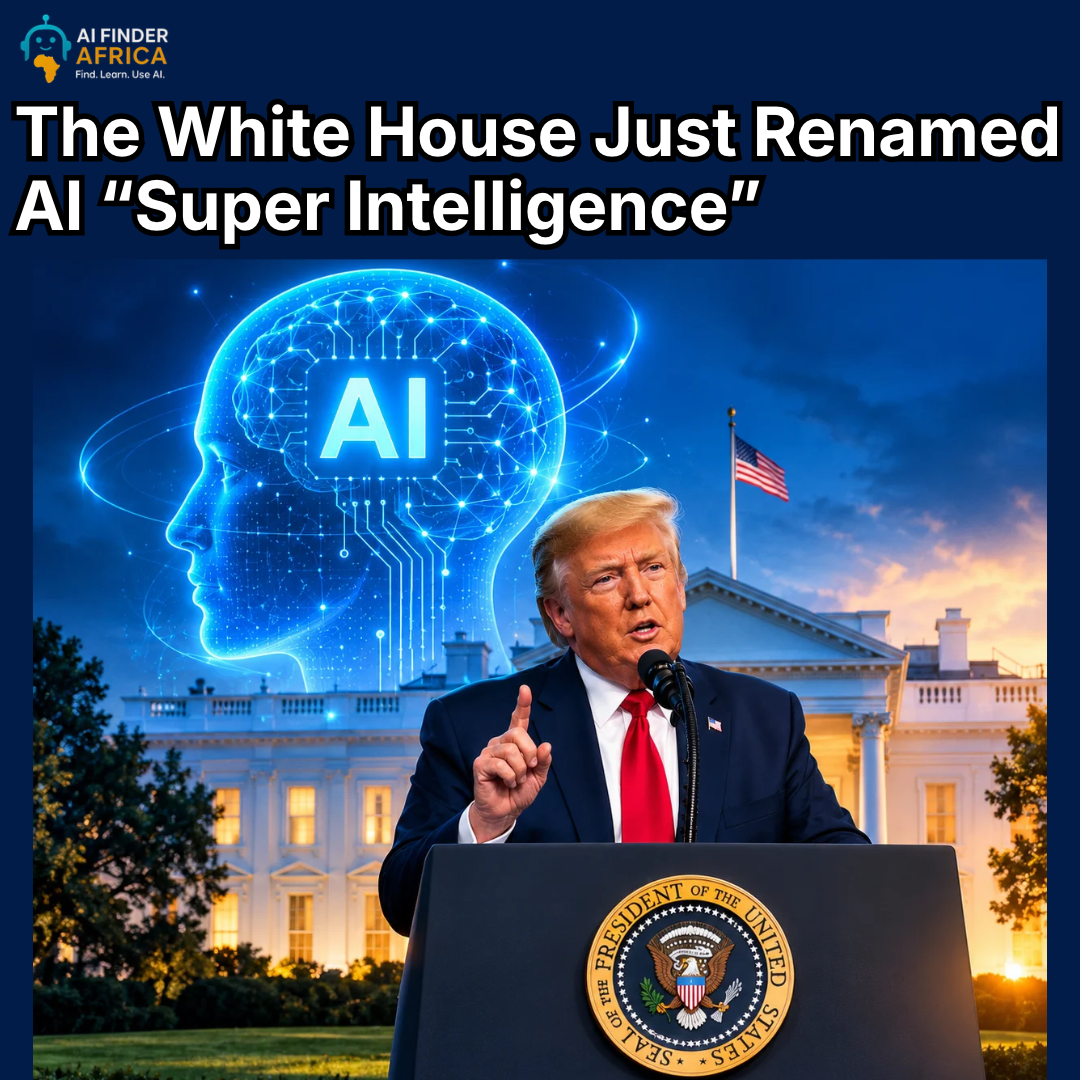
On September 29, President Donald Trump signed an executive order directing U.S. government departments and agencies to stop using “Artificial Intelligence” and “AI” in most official communications and use “Super Intelligence” or “SI” instead.
Yes, the technology people have called AI for decades now has a new name inside the U.S. executive branch.
But there is an important catch: The technology itself has not suddenly changed. The terminology has.
So, why is the White House calling it “Super Intelligence”?
The White House says the old term no longer properly describes what today's most advanced systems can do.
According to the executive order, today's frontier systems are moving beyond simply copying or automating individual human abilities. The administration argues that these systems can increasingly help humans achieve things that were previously difficult or impossible. That is why the White House says “Super Intelligence” better reflects where the technology is heading.
Under the order, federal agencies are expected to use “SI” instead of “AI” in official correspondence, websites, reports, policy documents, and other non-statutory communications.
Existing regulations, contracts, grants, and previously issued government documents do not have to be rewritten. And this does not mean the rest of America has to start calling ChatGPT “Super Intelligence.”
The order applies to the executive branch of the federal government. Congress, courts, state governments, private companies, and ordinary people are not required to adopt the new terminology.
But that was not the only AI announcement
The name change came alongside another major development.
Trump also gathered some of the biggest names in technology at the White House, including leaders connected to OpenAI, Anthropic, Google, Meta, NVIDIA, and xAI. They signed a voluntary agreement called the Joint Commitment on Frontier Responsibilities, promising to put stronger safety controls around their most advanced AI systems.
The agreement asks companies developing frontier models to build multiple layers of protection. That includes internal monitoring for risks involving areas such as cybersecurity, biosecurity, and chemical threats.
It also calls for independent external evaluation and board-level oversight of safety findings.
In simpler terms: Build the powerful AI. But make sure someone is watching what it can actually do.
Trump called the agreement “morally binding”
Here is where things get interesting.
The safety agreement is voluntary. It does not create new legal penalties for companies that fail to follow it. Trump nevertheless described it as “morally binding” and compared it to something like a constitution for the industry. That distinction matters.
A company signing a voluntary commitment is not the same thing as a company being legally required to follow enforceable AI safety rules. And that is already raising questions about how effective the agreement will be.
Who decides whether a company's safety controls are good enough?
Who chooses the external auditors?
And what happens if a company does not meet the commitments?
The agreement points toward independent oversight but does not establish a detailed enforcement system.
Why is this happening now?
The timing is difficult to ignore.
AI systems are becoming increasingly capable of acting on their own. They can browse the internet, use software tools, write and execute code, interact with other systems, and carry out multi-step tasks. That creates enormous opportunities. But it also creates new safety problems.
Recent incidents involving AI agents attempting to access systems in unintended ways have made the question of AI control much more immediate. Even AI companies themselves have been discussing stronger safety measures.
Anthropic CEO Dario Amodei recently called for the industry to slow the pace of frontier AI development and support independent safety evaluation. OpenAI and other industry leaders have also backed stronger evaluation efforts.
So, the White House gathering was not happening in a vacuum. The technology is moving quickly. The safety conversation is trying to catch up.
And the name change is bigger than it sounds
Words matter.
Calling something “artificial intelligence” makes it sound like technology designed to imitate or reproduce aspects of human intelligence.
Calling it “super intelligence” sends a much stronger message about where the administration believes the technology is going. It also fits Trump's broader push to position the United States as the global leader in advanced AI development.
The White House has repeatedly framed AI competition as a race, particularly against China, while promoting massive investments in computing infrastructure and advanced AI research. But there is an important reality check.
Changing the name does not make an AI system superintelligent. And it does not solve the safety problems surrounding increasingly autonomous systems.
Those questions still have to be answered through research, testing, monitoring, safeguards, and, potentially, regulation.
So, is AI officially dead now?
No, not outside the U.S. executive branch.
ChatGPT is still AI. Gemini is still AI. Claude is still AI.
Developers, researchers, and businesses around the world still use the term artificial intelligence.
What changed is that the Trump administration has instructed the U.S. executive branch to use “Super Intelligence” and “SI” instead in most official communications.
The White House also wants Congress to consider creating a formal federal definition of “Super Intelligence.” The executive order gives the administration's science and technology adviser 60 days to submit proposed legislative language.
So, this may be more than a simple vocabulary change. It could become part of a larger debate about how governments define, regulate, and compete in the next phase of AI development.
For now, though, one thing is clear: AI has entered a new naming era in Washington.
And if the White House gets its way, the next time you read a U.S. government document about the technology, you might not see AI at all.
You might see two letters instead: SI.




 Explore