


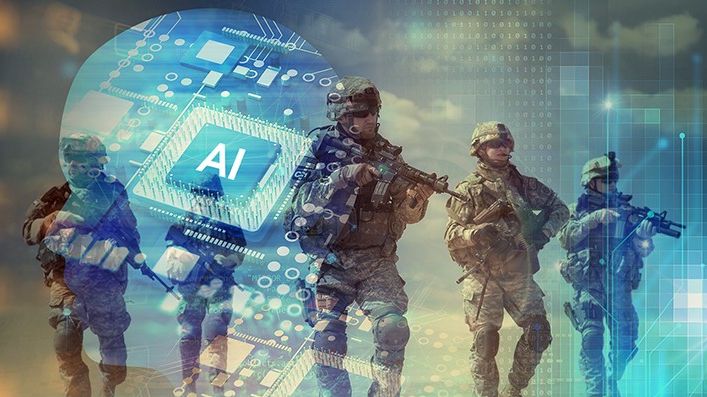
AI Refused to Power War? The Lawsuit Shaking the Future of Military Technology.
Imagine building one of the most powerful artificial intelligence systems in the world, only to find yourself in a courtroom battle with the U.S. government.
That’s exactly what’s happening right now with Anthropic, the fast-rising AI company behind the
chatbot Claude.
In a dramatic twist that feels straight out of a tech thriller, Anthropic has filed two federal lawsuits against the Trump administration, accusing Pentagon officials of retaliating against the company for refusing to loosen its AI safety rules.
The dispute has ignited one of the biggest debates in modern technology:
Who should control how artificial intelligence is used in warfare governments or the companies that build it?
How the Fight Started
The tension didn’t appear overnight.
Anthropic had already been working with the U.S. government. In fact, it's AI tools had been used on classified military networks to analyze complex intelligence and process large volumes of data quickly.
But things took a sharp turn during negotiations with the United States Department of Defense.
According to court filings, Pentagon officials wanted broad permission to use Anthropic’s AI system for any lawful military purpose.
Anthropic pushed back.
The company insisted on keeping two strict rules in place:
• No use of its AI to run fully autonomous weapons
• No use of its AI for mass surveillance of American citizens
These weren’t small details, they were core principles the company says it was founded on.
Anthropic’s leadership argued that allowing those uses would go directly against its mission to build safe and responsible artificial intelligence.
The Pentagon’s Surprise Move
The disagreement escalated quickly.
In late February, Defense Secretary Pete Hegseth announced a dramatic decision, the Pentagon would label Anthropic a “supply chain risk.”
That label carries serious consequences.
It effectively blacklists the company from Pentagon-related work, preventing defense contractors from using Anthropic’s technology in military projects.
What made the decision even more shocking?
Experts say the designation is normally reserved for foreign companies linked to adversaries like China or Russia, not American tech firms.
In other words, Anthropic suddenly found itself placed in the same category as potential national security threats.
Anthropic Fires Back in Court
Anthropic didn’t take the move quietly.
On Monday, the company filed two federal lawsuits, one in California and another in Washington, D.C., asking judges to block the Pentagon’s action.
The lawsuits claim the government:
• Violated the company’s First Amendment rights
• Misused laws designed for national security threats
• Punished the company for expressing its views on AI safety
In blunt language, the filing argues the government tried to force Anthropic into a difficult choice:
Either remove its safety restrictions or face serious economic damage.
Why This Case Could Reshape AI
This isn’t just another tech lawsuit.
The outcome could set a major precedent for the future of artificial intelligence and warfare.Here’s why:
AI systems like Claude are becoming incredibly powerful tools for analyzing intelligence, planning operations, and automating decision-making.
Governments around the world are racing to integrate them into military strategy.
But companies building these systems are increasingly worried about how they might be used.
Anthropic’s stance reflects a growing movement in Silicon Valley:
AI developers trying to set ethical boundaries for their technology.
Meanwhile, government officials argue that private companies should not dictate how national defense tools are used, as long as those uses are legal.
The Bigger Tech Rivalry Behind the Scenes
There’s another layer to the story.
While the Pentagon began phasing out Anthropic’s technology, other AI companies, including
OpenAI and xAI, have reportedly continued working with defense systems under broader usage terms.
In the fast-moving AI race, that means the government may simply turn to competitors willing to provide fewer restrictions.
For Anthropic, the stakes are enormous.
The company argues the blacklist could cost billions of dollars in contracts and partnerships.
The Real Question Everyone Is Asking
At its heart, this battle raises a deeper question that goes far beyond one company:
Should AI creators have the power to limit how their technology is used?
Or…
Should governments decide, especially when national security is involved?
The courts may soon weigh in.
And whatever the outcome, one thing is clear:
The fight between Anthropic and the Pentagon could become one of the defining moments in the global debate over AI, ethics, and the future of warfare.



 Explore