


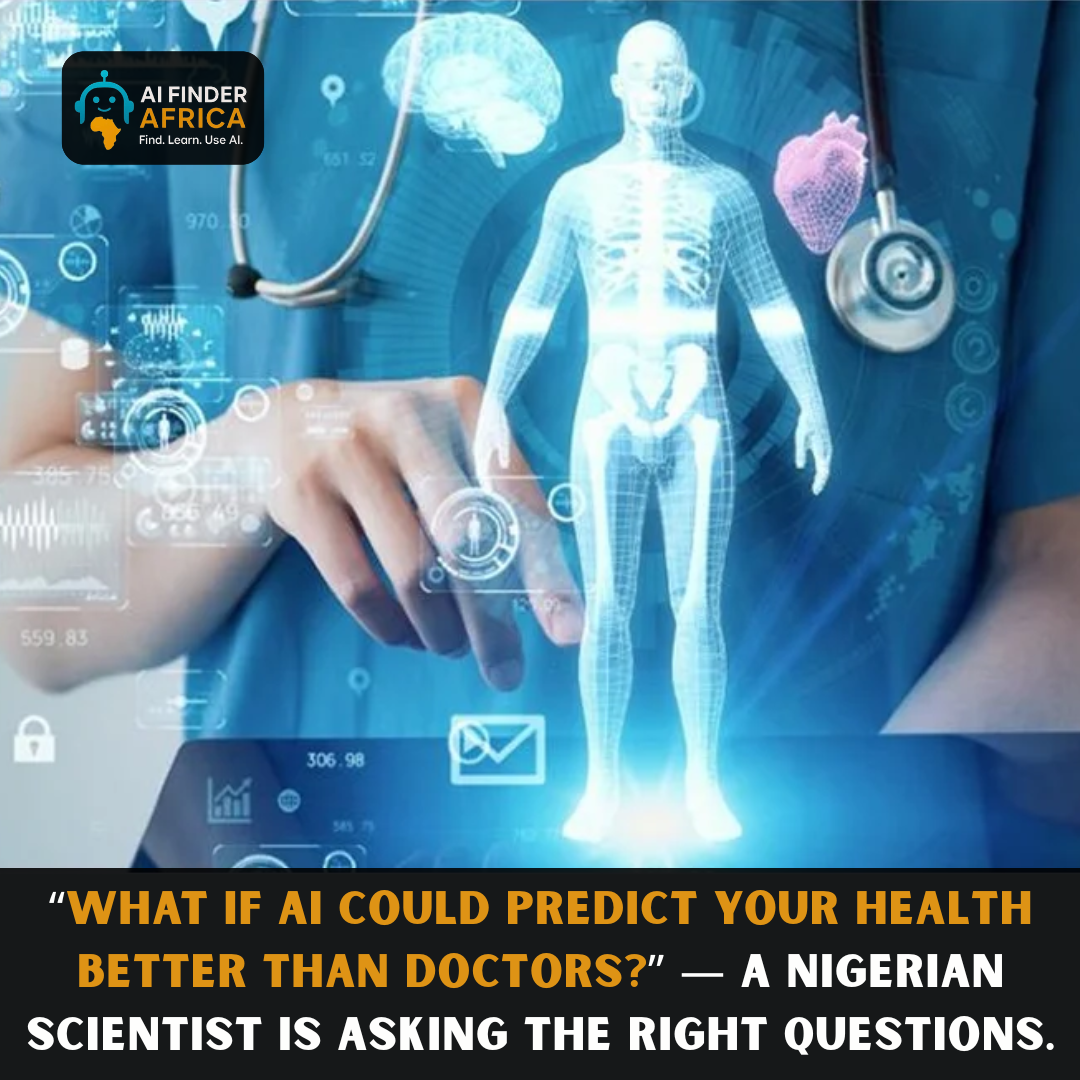
“What If AI Could Predict Your Health Better Than Doctors?” — A Nigerian Scientist Is Asking the Right Questions.
What if the future of healthcare isn’t just about better hospitals… but better predictions?
That’s the question Abdulazeez Alabi, a Nigerian biostatistician, is helping the world answer, and the results are turning heads in global health circles.
The Real Problem No One Talks About Enough
Chronic diseases like diabetes, heart disease, and kidney issues aren’t just medical problems. They’re system problems.
Across Africa and other low-resource regions, healthcare systems are stretched thin:
- Limited access to advanced diagnostics
- Fewer specialists
- Less patient data to work with
So predicting who gets sick, how severe it gets, and what happens next becomes incredibly difficult.
And that’s where this new research comes in.
The Study That’s Changing the Conversation
In a recent paper published in the Cureus Journal of Medical Science (under Springer Nature), Alabi and his team set out to answer a deceptively simple question:
When is AI actually better than traditional methods in healthcare, and when is it not?
AI vs Traditional Models: Who Wins?
For years, doctors and researchers have relied on logistic regression, a classic statistical method, to predict patient outcomes.
But now, newer AI models like:
- XGBoost
- LightGBM
are stepping into the spotlight.
The result?
These advanced models consistently delivered better prediction accuracy.
Sounds like a clear win for AI, right?
Not so fast.
The Catch No One Should Ignore
Here’s where it gets interesting, and a bit risky.
Alabi warns that higher accuracy doesn’t always mean better decisions in real life.
Some AI models:
- Overestimate patient risk
- Require extra recalibration before real-world use
- Can mislead doctors if not carefully adjusted
In simple terms, A model saying “70% risk” should actually mean 70% in reality, not just look good on paper.
Enter: The Next Generation, Foundation Models
The study also explored something even more futuristic: foundation models trained on massive health datasets.
And here’s the surprising part:
These models can perform just as well, sometimes better, using less than 1% of the usual data.
For countries with limited healthcare data (like many in Africa), this is a big deal.
So… Do We Still Need Traditional Methods?
Yes, and that’s one of the most refreshing takeaways from this research.
Alabi emphasises that:
- When data patterns are simple and stable
- Traditional models like logistic regression can match or outperform AI
- And they do it with less cost and complexity
In other words, New doesn’t always mean better. Smart use matters more.
The Game-Changer: “Calibration First”
One of the biggest contributions of this study is a mindset shift:
Instead of chasing accuracy alone, focus on calibration.
The team even proposed strict benchmarks:
- Predictions must closely match real outcomes
- Models that fail this, no matter how “accurate”, shouldn’t be used
It’s a bold stance, but one that could prevent bad clinical decisions.
Why This Matters for Nigeria (and Beyond)
As AI tools slowly enter healthcare systems across Africa, this research acts like a guidebook.
It says:
- Use AI, but carefully
- Don’t abandon simpler methods
- Prioritise trust, transparency, and real-world reliability
Because at the end of the day, this isn’t just about technology. It’s about people’s lives.
Final Thought
This isn’t just another AI story.
It’s a reminder that the future of healthcare isn’t about replacing humans with machines; it is about making smarter, safer decisions with the tools we have.
And thanks to researchers like Abdulazeez Alabi, that future is starting to look a lot more thoughtful and a lot more human.


 Explore