

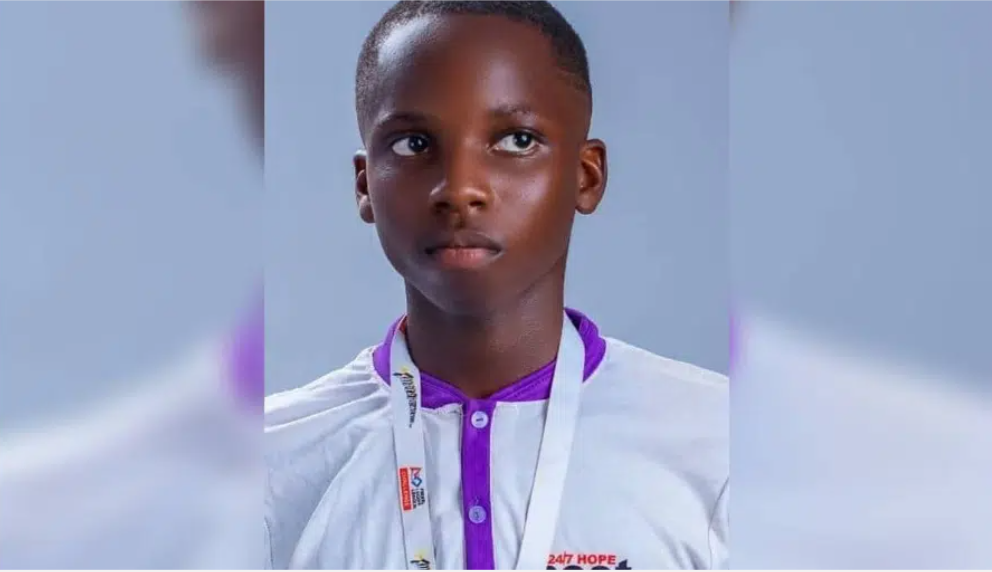
At Just 17, a Nigerian Teen Builds His Own AI Model and Founds a Startup
Okechukwu Nwaozor built an AI system.
He was 17, just out of secondary school, and entirely self-taught. When he shared his plans on Facebook, the comments ranged from disbelief to outright mockery. Yet here he is today, leading a project that has captured the attention of developers across Africa and beyond.
From Curiosity to Ambition
Nwaozor didn’t fall into AI because of hype around ChatGPT or viral TikToks. His fascination began much earlier, with a simple question: how does Google return so many accurate results instantly? That curiosity led him down the rabbit hole of machine learning and natural language processing.
By 2022, at just 14 years old, he had started gathering data and training basic AI models. As his skills grew, so did his ambition. His mission became clear: build an AI system that could compete with mainstream models.
The Birth of OkeyMeta
Fast forward a few years, and Nwaozor founded OkeyMeta, a company named by combining his own name with a nod to meta, a tech term that means to transcend. His goal wasn’t merely to copy existing tools but to adapt AI for developers and creators in Africa.
How OkeyMeta Works
Nwaozor fine-tuned smaller open-source models like Google’s Gemma-2B and adapted them with carefully curated African-focused datasets that he gathered and cleaned himself. By doing this, he tailored the AI to handle language, context, and cultural nuances that global models sometimes miss.
On top of this, he built:
- Custom reasoning systems to improve how the model thinks about responses
- Knowledge distillation pipelines that merge insights from multiple AI models
- APIs that developers can integrate into their own apps
This work, fine-tuning, creating custom logic layers, deploying APIs, is rarely seen from someone so young, anywhere in the world.
OkeyAI: The Product in Use
The main product stemming from OkeyMeta is OkeyAI, a chatbot and AI platform that can generate text, perform tasks, and integrate with apps via APIs. It is already attracting attention: about 900 users have signed up, and roughly 4,000 developers are actively using its APIs, impressive traction for a platform run on a shoestring budget.
In some ways, OkeyAI mirrors what popular AI models like ChatGPT and Gemini do, but it also offers features that local developers find compelling, such as more flexible token limits and the ability to slice and combine different AI outputs for creative use.
Funding, Challenges, and Survival
Raised with just ₦2.7 million (roughly $1,700) and running on affordable cloud infrastructure, OkeyMeta operates on a budget that wouldn’t pay for a day of compute for major AI labs like OpenAI or Google. These tech giants invest hundreds of millions into training their models on trillions of data points an almost unimaginable scale compared with what Nwaozor has achieved.
Because of the low funding, OkeyMeta struggles with rising compute costs: keeping the platform live costs around $100 per month, and scaling it to more users will require significantly more resources. While investors have shown some interest, Nwaozor insists that finding the right support, not just fast money with harmful strings attached, is crucial for sustainable growth.
What This Means for Africa’s AI Future
Whether or not OkeyMeta ever dethrones large models like ChatGPT, its significance extends beyond its current technical capability.
The project highlights how accessible AI development has become, thanks to open-source models and global research collaboration.
Young Africans can participate meaningfully in frontier tech, even without traditional credentials or big budgets.
This trend is part of a broader push across the continent from Nigerian government-backed open AI initiatives to startups building language tools that better reflect African languages and cultures.
Final Take
OkeyMeta represents more than an AI tool. It’s a statement of possibility: that with curiosity, resourcefulness, and hard work, even the most ambitious technology goals are not out of reach, no matter where you start.
Whether OkeyMeta becomes a major AI player or remains a bold experiment, it demonstrates a new reality: Africa’s young tech talent is ready to shape the future of artificial intelligence with voices and solutions that reflect its own people.

 Explore