


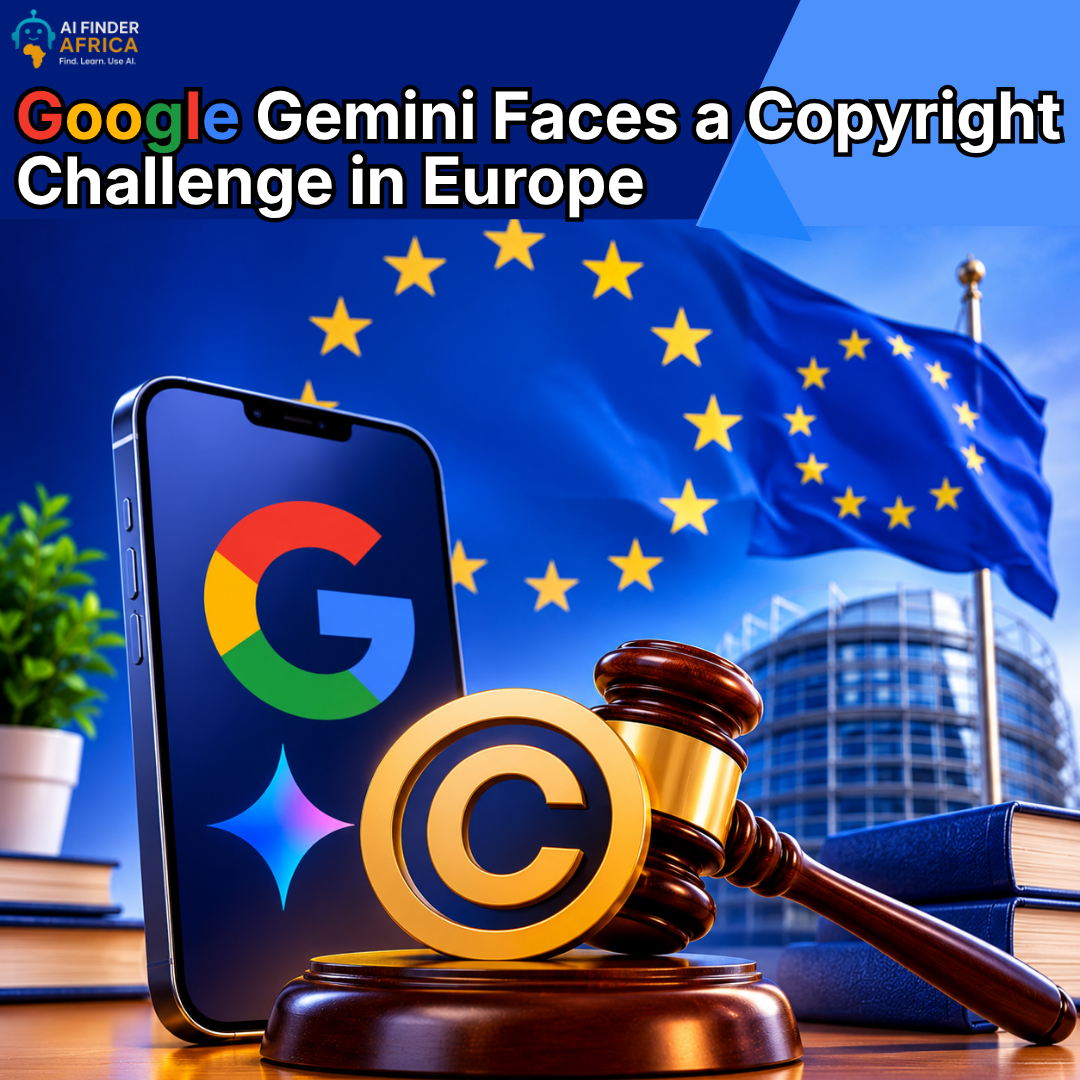
Google Gemini Faces a Copyright Challenge in Europe
Google Gemini Faces a Copyright Challenge in Europe
The dispute involves Google and a Hungarian online publisher called Like Company.
The publisher took legal action after discovering that Google's Gemini chatbot could summarize one of its articles when users asked questions about the story.
The article reportedly covered Hungarian singer Kozsó and his dream of bringing freshwater dolphins from the Amazon to Lake Balaton.
Like Company argued that Google was using its published work without permission.
Its concern goes beyond one article. If AI chatbots can take information from publishers, turn it into convenient answers, and deliver those answers directly to users, what happens to the websites that originally produced the information?
This is becoming a major issue for news organizations that depend on website traffic, advertising, subscriptions, and reader engagement to survive.
Europe's Top Court Adviser Has Weighed In
On November 3, 2026, Maciej Szpunar, an Advocate General at the European Court of Justice, delivered an opinion in the case.
His position is particularly important because he believes Gemini's use of published news articles could infringe copyright under certain circumstances.
For example, problems could arise if an AI chatbot:
Gets around a publisher's paywall or other technical restrictions.
Reproduces recognizable parts of a copyrighted article.
Uses a publisher's original expression in a way that violates its rights.
However, there is an important distinction.
Copyright does not automatically protect the facts contained in a news report. It protects the original way those facts are expressed.
So, an AI system explaining that a particular event happened is not necessarily committing copyright infringement. But reproducing a journalist's distinctive writing or bypassing restrictions could raise a different legal question.
And another detail matters: the Advocate General said there was no evidence that Google had used Like Company's articles to train Gemini.
Does This Mean Google Cannot Train AI With Copyrighted Content?
Not exactly.
One of the most interesting parts of the legal opinion is that it separates training an AI model from using copyrighted material to generate answers.
AI models learn by processing enormous amounts of information, including text, images, and other digital material. Publishers have argued that using their articles for this process without permission or payment violates their copyright.
However, the Advocate General recognized that European copyright law contains a text-and-data-mining exception that can permit the use of copyrighted material for AI training.
This does not mean every use is automatically legal. The opinion discusses conditions and limitations, including the rights of copyright owners and safeguards against AI systems memorizing and reproducing protected material.
More importantly, the court adviser did not find evidence that the specific publisher's articles had been used to train Gemini.
The bigger concern in this case is what happens when Gemini retrieves and reuses published articles to answer users directly. That distinction could become extremely important for the future of AI development.
Why Publishers Are Worried About AI Chatbots
Think about how people traditionally find news online.
You search Google, see a list of websites, click on an article, read the story, and possibly explore other content on that website. That visit can generate advertising revenue, subscriptions, and returning readers for the publisher.
But AI chatbots are changing that experience.
A user can now ask Gemini to explain a news event and receive a summary without necessarily opening the original article. This creates a difficult situation for publishers.
They still need journalists, editors, photographers, and researchers to produce reliable information. But if AI systems increasingly deliver that information without sending readers back to the original sources, publishers could lose an important part of their business.
The European Publishers Council has raised concerns about this growing imbalance. Its argument is that publishers should not have to choose between protecting their copyright and remaining visible on platforms that control access to online audiences.
And this is not just a Google problem. Similar questions affect other AI companies that retrieve, summarize, and reproduce information from the internet.
Google's Response: Gemini Creates Original Answers
Google has defended its approach. The company argues that Gemini learns linguistic patterns and generates original responses rather than simply copying published articles.
Google also points to controls that allow publishers to manage how their content is accessed and used by its services.
The company supports Europe's text-and-data-mining exceptions, arguing that they are important for AI development and innovation.
Google's position reflects a wider debate in the technology industry.
AI companies need access to large amounts of information to build useful systems. Publishers, on the other hand, want control over their work and a fair opportunity to benefit when their content is used commercially.
Both sides have something important at stake.



 Explore