


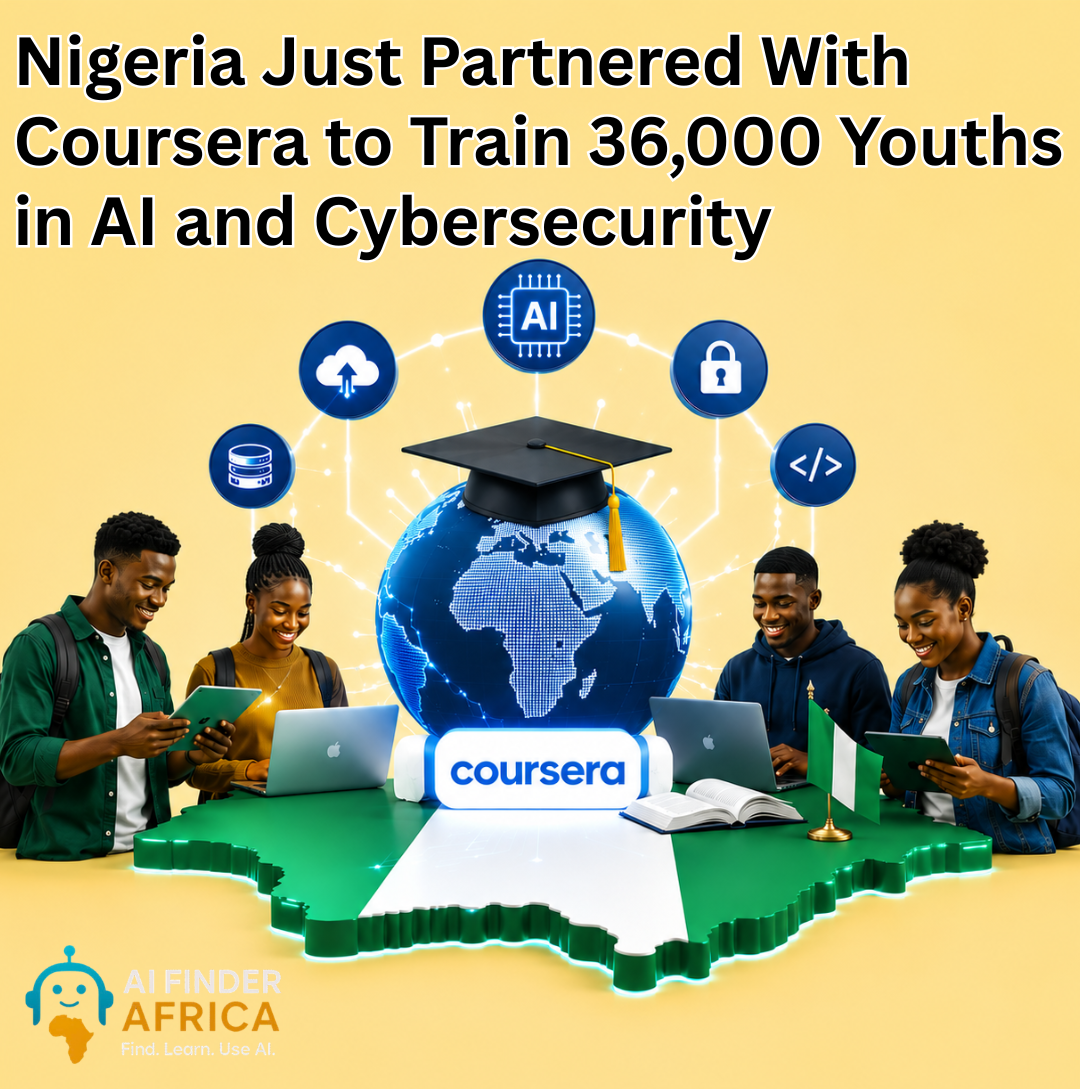
Nigeria Just Partnered With Coursera to Train 36,000 Youths in AI and Cybersecurity And It Could Change Thousands of Lives
Nigeria Just Partnered With Coursera to Train 36,000 Youths in AI and Cybersecurity And It Could Change Thousands of Lives
For years, one sentence has haunted millions of young Nigerians: “There are no jobs.”
But quietly, something bigger may be happening beneath the surface. The world is changing faster than most people realize.
Artificial Intelligence is reshaping industries. Cybersecurity jobs are exploding globally. Tech companies are hiring remotely across borders. And digital skills are becoming more valuable than traditional degrees in many sectors. Now Nigeria wants in.
In what may become one of the country’s biggest digital education moves in recent years, the Federal Government has partnered with Coursera to launch the Digital Training Academy (DTA), a programme designed to train 36,000 Nigerian youths in high-demand technology skills like Artificial Intelligence, Data Science, Cybersecurity, Cloud Computing, and Software Engineering.
And honestly? This is much bigger than another government announcement. Because for many young Nigerians, this could represent access to an entirely different future.
Nigeria Is Betting Big on Digital Skills
The partnership was announced by Nigeria’s Minister of Education, Dr Tunji Alausa, during the Education World Forum 2026 in London.
According to the minister, the programme is fully funded for the first year, with the Federal Government covering 36,000 learning licenses across Coursera and Pluralsight to remove financial barriers for participants. That detail matters. Because for many Nigerians, access not talent has always been the problem.
Global tech courses, certifications, and digital learning platforms are often too expensive once converted to naira. Now imagine thousands of Nigerian youths suddenly gaining access to:
AI training, Cloud computing certifications, Cybersecurity programmes, Data science courses, Software engineering pathways, Globally recognised credentials
Without personally paying hundreds or thousands of dollars. That changes the equation completely.
The Global Tech Economy Does Not Care Where You Live Anymore
This is the part many people still do not fully understand. The internet quietly changed the rules of employment.
Today, a skilled developer in Lagos can work remotely for a company in Canada.
A cybersecurity analyst in Abuja can secure systems for firms in Europe. An AI engineer in Port Harcourt can work as a freelancer globally from a laptop. Location matters less than skill. And governments around the world are beginning to realize this.
Countries are now aggressively investing in digital workforce development because the next economic war may not be fought with oil, manufacturing, or physical resources alone. It may be fought with talent. Nigeria appears to be recognizing that reality.
AI and Cybersecurity Are Becoming the New Gold Rush
The programme’s focus areas are not random. Artificial Intelligence and cybersecurity are among the fastest-growing sectors globally.
According to global industry reports, demand for AI specialists, cloud engineers, cybersecurity analysts, and data professionals continues to rise as companies race to digitize operations and secure digital infrastructure. And Nigeria has one major advantage:
A young population. One of the youngest populations in the world. If properly trained, that demographic could become an enormous digital workforce. That is likely why the government is now pushing heavily into technical and digital education reforms.
This Is Part of a Bigger Transformation Happening in Nigeria
The Coursera partnership is not happening in isolation. Over the past year, Nigeria has aggressively expanded discussions around:
- AI education
- Digital skills training
- Technical and vocational education
- Youth employability
- Innovation ecosystems
- Startup development
- Technology infrastructure
The government’s earlier Technical and Vocational Education and Training (TVET) programme reportedly attracted over 90,000 applications shortly after launch.
That alone tells you something important: Young Nigerians are hungry for opportunities. Very hungry.
But There Is Still One Big Question
Can Nigeria scale this successfully? Because training 36,000 youths sounds impressive. But Nigeria has over 200 million people. Millions of graduates already struggle with unemployment or underemployment.
The challenge is no longer just launching programmes. It is building sustainable systems that produce real outcomes.
That means:
- Reliable internet access, mentorship, practical projects, internship pipelines, employer partnerships, startup support, and long-term ecosystem development.
Without those things, certificates alone may not solve unemployment. But if executed properly? This initiative could become one of the smartest long-term investments Nigeria has made in years.
The Most Interesting Part Is What This Says About Nigeria’s Future
For decades, Nigeria’s economy has been heavily tied to oil. But slowly, another resource is becoming more important: Human capital. The global economy is entering an era where digital intelligence may matter more than natural resources. Countries that train their youth effectively in AI, cybersecurity, software engineering, and emerging technologies could dominate future industries.
And perhaps Nigeria is finally starting to realize that its greatest untapped asset is not underground. It is sitting in classrooms, homes, campuses, cybercafés, and smartphones across the country. Young people. Waiting for access. Waiting for an opportunity. Waiting for the right skills. Waiting for a chance to compete globally.
This partnership with Coursera may not solve everything overnight. But it signals something important: Nigeria does not just want to consume the future anymore. It wants to participate in building it.



 Explore