

Nigeria’s 2027 Election May Be Decided by AI Before Voting Starts
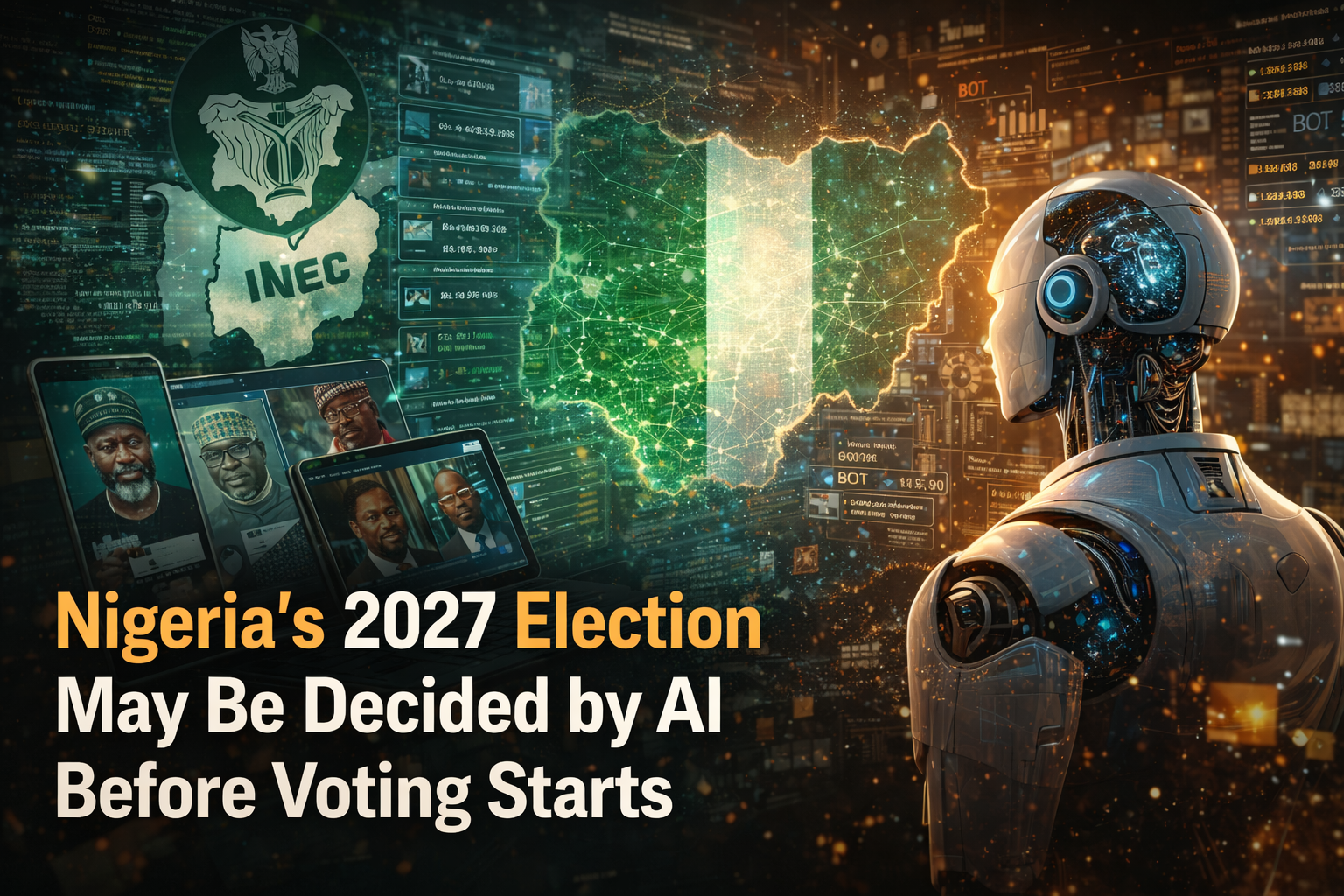
Nigeria’s next presidential election is scheduled for January 16, 2027.
But according to tech and democracy experts, the real campaign may have already begun, and it’s happening online.
Not at rallies.
Not on billboards.
But inside algorithms, data systems, and artificial intelligence tools are quietly shaping what millions of Nigerians see on the internet every day.
That warning was at the centre of discussions during Open Data and AI Day 2026, organised in Lagos by civic technology organisation BudgIT and its innovation hub CivicHive.
The message from the event was simple but serious:
Artificial intelligence could play a major role in shaping how Nigerians vote in 2027.
The New Battlefield: Data and Algorithms
Political campaigns have always tried to influence voters.
But today, the tools have changed.
Instead of relying mainly on rallies and television ads, campaigns now have access to massive amounts of data about voters from social media behaviour to browsing habits.
According to the Nigerian Communications Commission, Nigerians consumed over 13 million terabytes of internet data in 2025 alone.
Every search, like, comment, or share creates a digital footprint.
AI systems can analyse those footprints to understand what people care about, what they fear, and what might influence their vote.
That allows campaigns to deliver highly personalised political messages to different groups of voters, a strategy known as 'micro-targeting'.
Simply put, two people in the same city might see completely different political messages online, each designed specifically for them.
The Influence of Bots and Troll Farms
The spread of misinformation doesn’t happen by accident.
Experts say coordinated networks of automated accounts, often called 'bots' or 'troll farms', are frequently activated during election seasons.
These accounts can amplify certain messages, push hashtags, and flood comment sections to make specific narratives appear more popular than they really are.
In some cases, the voices dominating online conversations may not even be real people.
Is Nigeria Ready?
Despite the growing influence of AI, some researchers believe Nigeria’s institutions are still catching up.
The country’s electoral body, the Independent National Electoral Commission (INEC), has begun exploring how AI could help improve elections, including detecting manipulated media or strengthening voter verification systems.
But large-scale deployment has not yet happened.
Experts say responsible use of AI in elections would require strong safeguards, including independent audits, clear regulations, and transparency in how AI tools are used.
Those systems are still developing.
The Bigger Risk for Democracy
For many analysts, the biggest concern isn’t just that AI could influence elections.
It’s that voters may begin to feel they no longer understand the forces shaping political conversations online.
When algorithms decide which posts trend, which videos go viral, and which messages reach certain communities, public debate can become harder to track.
And in a country where voter turnout has already been declining, that could deepen political disengagement.
The Election Before the Election
Nigeria’s 2027 vote will still happen at polling stations across the country.
But by the time voters get there, their opinions may already have been shaped by months of algorithm-driven messaging, targeted political content, and AI-generated media.
In other words, the real contest might happen long before election day.
Not in ballot boxes.
But in the feeds, searches, and timelines Nigerians scroll through every day.



 Explore