


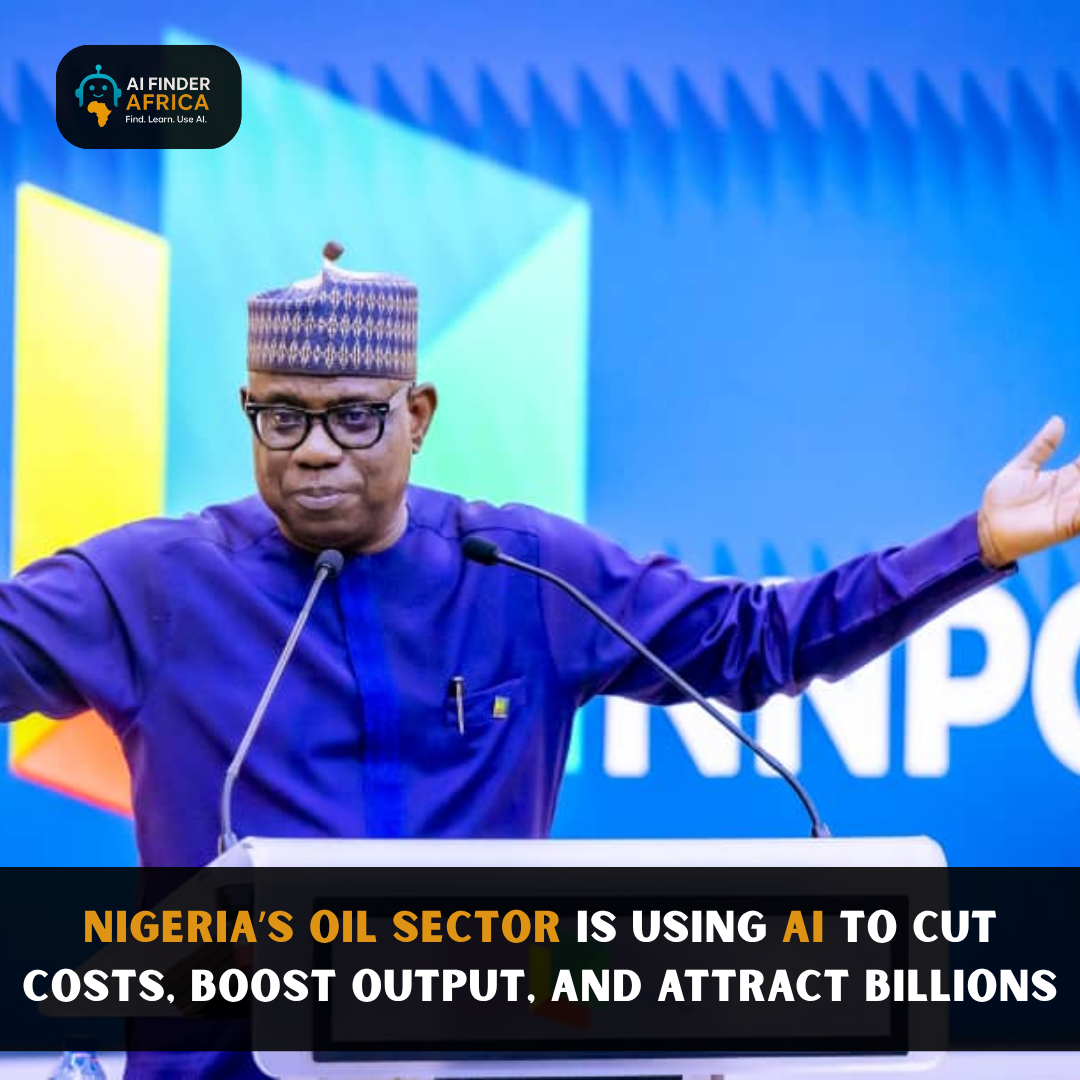
Nigeria’s Oil Sector Is Using AI to Cut Costs, Boost Output, and Attract Billions
For years, Nigeria’s oil sector has been full of potential…
Big reserves. Big ambitions.
But also, delays, disputes, and missed opportunities.
Now, something is shifting.
And this time, it’s not just talk.
Billions are finally flowing in
At a major industry gathering in Abuja, the Nigerian National Petroleum Company Limited revealed something huge:
Over $24 billion in new investments has already been unlocked
Another $10 billion is currently in progress
That’s a combined $34 billion pipeline, a strong signal that global investors are starting to pay attention again.
The announcement came at the 2026 edition of the Oloibiri Lecture and Energy Forum, where top players in the energy sector gathered to rethink Nigeria’s oil future.
The big goal: 3 million barrels per day
Nigeria isn’t just chasing investments for fun.
There’s a clear target:
3 million barrels of oil per day
And according to Bayo Ojulari, this goal is no longer just a dream—it’s within reach.
But here’s where things get interesting…
AI is now at the center of Nigeria’s oil strategy
Yes, AI again, but this time, not in classrooms or chatbots.
In oil fields.
The NNPC says it’s now:
- Running AI pilot projects
- Digitizing decades-old oil data
- Using technology to reduce costs and improve efficiency
And honestly, they’re sitting on a goldmine of information.
We’re talking about old seismic data, paper-based logs, and untapped exploration records dating back to 1956.
The plan?
Turn all that dusty data into actionable insights using AI
Because in today’s oil industry, data = money.
“Use AI or get left behind”
The warning from industry leaders was blunt:
If Nigeria doesn’t embrace AI fully, it risks becoming uncompetitive.
It’s no longer a “nice-to-have” tool.
It’s becoming:
- The backbone of smarter exploration
- A driver of lower production costs
- A key to faster project delivery
In simple terms:
Oil is no longer just about drilling, it’s about data and intelligence
So what changed?
For a long time, investors stayed away due to:
- Policy uncertainty
- Delayed project approvals
- Funding issues like cash call arrears
But things are improving.
Thanks to the Petroleum Industry Act:
- Regulations are clearer
- Investment risks are lower
- Confidence is returning
Even long-stalled projects are now moving closer to final approval.
The 3-step plan to hit the target
To reach that 3 million barrels/day goal, NNPC is focusing on:
1. Protect what already exists: Maintain current oil assets and improve operational standards
2. Grow production fast: Speed up projects that can deliver oil in the short term
3. Attract new players: Open up the sector to more investors and indigenous companies
But oil alone isn’t the full story
The government is also pushing something else:
Natural gas
According to Ekperikpe Ekpo, gas is key to power generation, critical for industrial growth, and a major export opportunity.
So while oil is the headline, gas is part of the long-term strategy.
Final thought
This isn’t just another oil sector announcement.
It’s a signal.
Nigeria is trying to move from slow, uncertain, and outdated systems to fast, data-driven, investor-friendly operations.
And the surprising driver behind this shift?
Artificial Intelligence.
If the country gets this right,
it won’t just hit 3 million barrels per day…
It could redefine how energy works in Africa’s biggest economy.




 Explore