


OpenAI Launches Dots: New AI Agents That Work for You 24/7
OpenAI Launches Dots: New AI Agents That Work for You 24/7
AI assistants have mostly worked like this: you ask, they answer.
OpenAI now wants to change that.
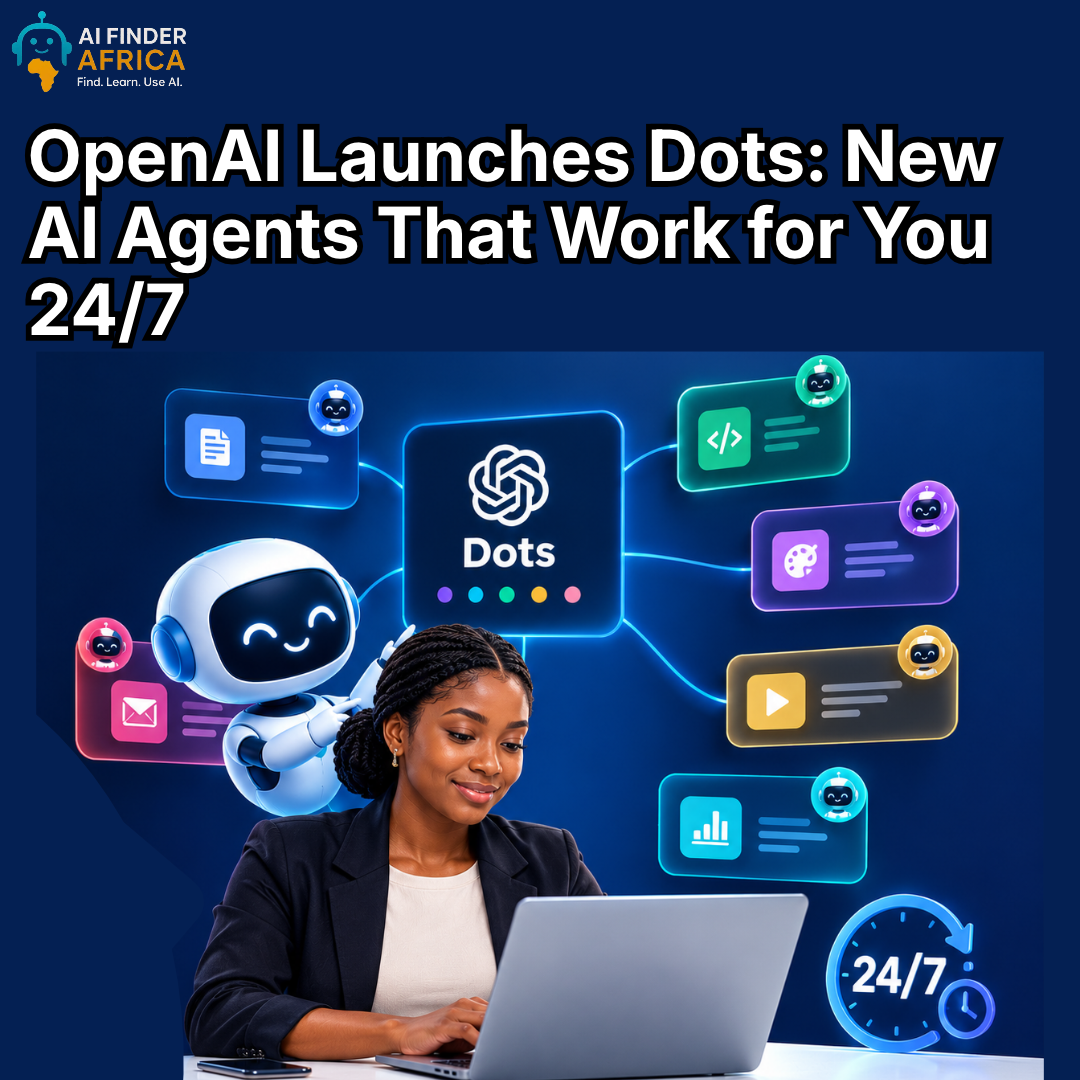
The company has launched Dots, a new type of AI agent designed to keep working toward your goals even after you stop chatting with it. OpenAI describes Dots as “always-on” agents powered by its GPT-6 Astra model, with their own cloud computer and web browser.
And yes, the idea is basically this: You give the AI a job. Then it keeps working.
So, what exactly is a Dot?
Think of a Dot less like a chatbot and more like a digital coworker.
Instead of asking ChatGPT to complete one task and waiting for the answer, you can give a Dot an ongoing responsibility. It can research information, work through projects, use connected apps, follow up on tasks, and come back to you when it needs a decision or has something worth showing you.
OpenAI says each Dot gets its own cloud computer and browser, allowing it to operate independently while you are away. It can also connect to more than 4,000 apps through OpenAI’s ecosystem. That changes the relationship between a person and an AI assistant.
You are no longer necessarily saying: “Do this for me.”
You could instead say: “Take care of this.”
Dots can keep working after you leave
This is probably the biggest difference.
Dots are designed to continue making progress between conversations rather than waiting for another prompt.
For example, a developer could have Dot monitor customer feedback, investigate reported issues, work on potential fixes, and prepare a pull request. A marketer could use one to keep track of campaign information, update materials, and prepare new content.
A researcher could ask a Dot to monitor new information and rerun an analysis when relevant evidence changes. And a sales team could use one to keep proposals updated as information changes.
The important part is that these are not necessarily one-off tasks. The Dot is designed to stay involved.
It can also learn how you work
OpenAI says Dots can learn from your feedback over time. So instead of repeatedly explaining how you like something done, the agent can build an understanding of your preferences, working style, and expectations.
You can interact with a Dot through ChatGPT, and connections to platforms such as Slack and Microsoft Teams let it work across different communication environments. Voice interaction is also available, with text messaging planned. For people managing several digital tools every day, that could be a major shift.
Your AI does not just sit inside one chat window. It follows the work wherever it happens.
But OpenAI knows “always-on” AI comes with a big problem
Giving an AI agent more independence also gives it more opportunities to make mistakes.
An AI that answers a question incorrectly is one thing. An AI that can access your apps, browse the internet, send information, or make changes while you are away is a completely different problem. That is why OpenAI has built permission controls, custom rules, and confirmation systems into Dots.
Users can decide what a Dot is allowed to do independently and which actions require approval. OpenAI also says its systems include automated review for consequential actions and safeguards designed to detect malicious instructions and other risky behavior.
OpenAI's own safety testing also found areas that needed improvement, particularly around sensitive disclosures and confirmation behavior. The company says it updated its confirmation policies after those tests.
So, the pitch is not simply: “Let the AI do everything.”
It is closer to: “Let the AI do more but give you control over the boundaries.”
Who gets Dots?
The rollout is gradual.
OpenAI says Dots are becoming available to ChatGPT Pro users in eligible markets, Business Premium users, and Enterprise customers through a beta that administrators can enable. Access can take several days to reach eligible accounts.
For the initial period, OpenAI says Dot usage will not count toward eligible users' plan allowances, with longer-term usage terms to be announced later.
For now, users create their Dot through ChatGPT on desktop. Mobile access is available for interacting with a Dot, but creating one currently requires desktop.
This is bigger than another chatbot feature
The interesting part about Dots is not the name. It is the direction.
For years, AI has largely been a tool you operate. Now companies are increasingly building AI that can operate on your behalf. That is the bigger story behind OpenAI's Dots.
The company is not just trying to make AI answer questions faster. It is moving toward AI that can take responsibility for ongoing digital work, use multiple tools, remember context, and continue operating without someone sitting in front of the screen.
And with companies across the industry racing toward autonomous agents, the competition is moving beyond “Which AI gives the best answer?”
The new question is becoming: “Which AI can actually get the job done?”
For users, that could mean less repetitive digital work. For businesses, it could mean AI workers that operate across entire workflows. And for everyone else, it may be the beginning of a much bigger change in how we work with computers. AI is no longer just waiting for your next prompt.
With Dots, OpenAI is betting that the next generation of AI will keep working even when you walk away.




 Explore