


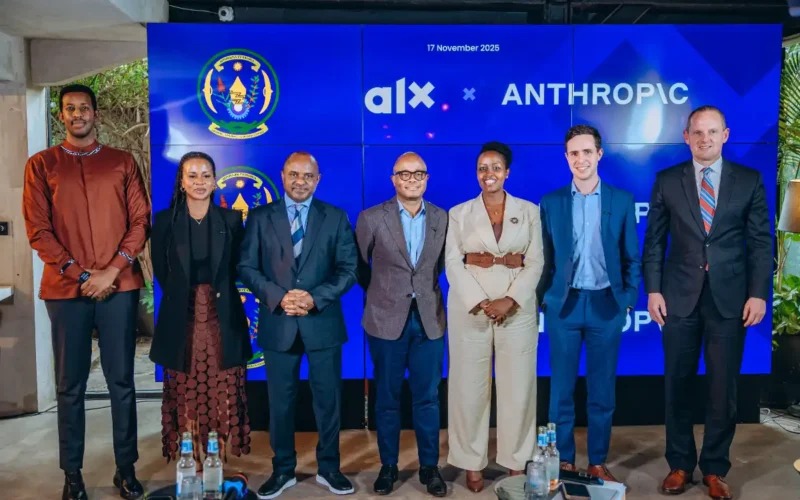
Rwanda Just Partnered with Anthropic — And AI Is About to Enter Its Classrooms, Hospitals, and Government Offices
Something interesting is quietly happening in East Africa… and it might change how governments use AI across the continent.
This week, the Government of Rwanda signed a three-year Memorandum of Understanding with Anthropic, the AI company behind Claude, to integrate artificial intelligence directly into its education system, healthcare services, and public sector operations.
Yes, you read that right.
Not a pilot.
Not a “let’s test this in one ministry” experiment.
A national-level AI rollout plan.
So… What Does This Partnership Actually Mean?
Rwanda is moving beyond talking about AI policy to actually deploying AI tools where they matter most in classrooms, hospitals, and government workflows.
Through this partnership, government developers and public sector teams will now get access to Anthropic’s large language model, Claude Code, API credits for building AI-powered public tools, and hands-on training for civil servants and technical teams.
Instead of outsourcing intelligence, Rwanda is building the internal capacity to create its own AI-driven systems.
And that’s a big deal.
AI in Healthcare? This Is Where It Gets Real
This isn’t just about automating emails in government offices.
The collaboration is tied directly to Rwanda’s national health priorities, including:
- Eliminating cervical cancer
- Reducing malaria cases
- Lowering maternal mortality
With AI models trained on health data patterns, predictive systems could help health workers detect risk earlier, allocate resources better, and move from treatment-first care to prevention-first systems.
In regions where hospital capacity is already stretched, even small improvements in prediction could translate into thousands of lives saved.
It Actually Started with Teachers
Interestingly, this agreement builds on an education partnership announced back in November 2025.
That earlier rollout included 2,000 Claude Pro licences for educators, AI literacy training for public servants, and a Claude-powered learning companion deployed across eight African countries.
Why This Matters for Africa
This is Anthropic’s first formal multi-sector government MoU in Africa.
And it signals something deeper:
African governments are no longer waiting for AI innovation to trickle down from global tech ecosystems. They’re beginning to co-build it into public systems from the ground up with training, support, and national deployment strategies included from day one.
If this model works in Rwanda, don’t be surprised if more countries begin embedding AI directly into public infrastructure instead of treating it as a private-sector experiment.
Because the future of AI in Africa might not live in startups alone…
It might live in ministries.


 Explore