


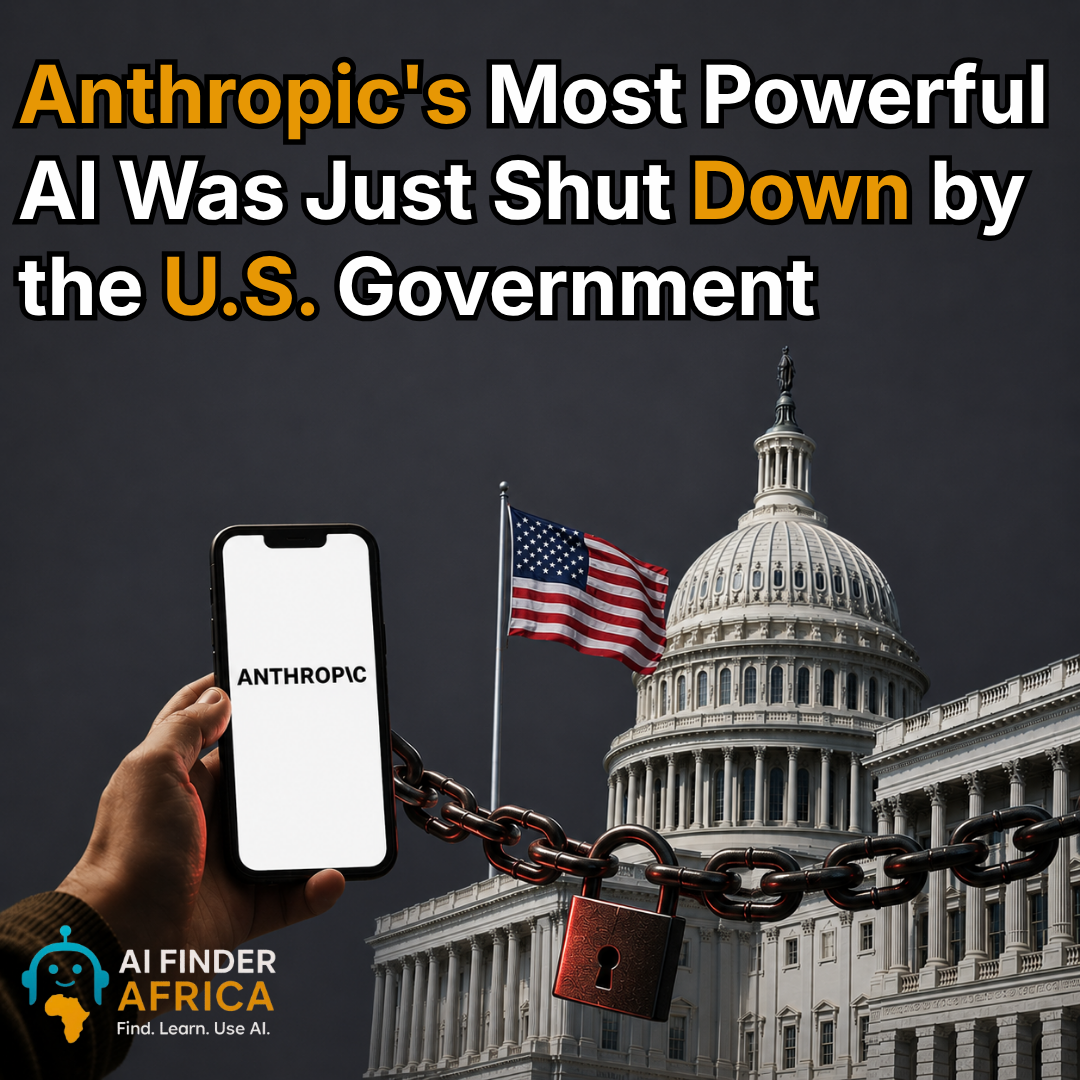
Anthropic's Most Powerful AI Was Just Shut Down by the U.S. Government. Here's What Happened
Anthropic's Most Powerful AI Was Just Shut Down by the U.S. Government. Here's What Happened
Imagine launching one of the most advanced AI systems ever built.
The tech world is buzzing. Developers are eager to test it. Businesses are lining up to use it.
Then, just days later, the government steps in and effectively pulls the plug.
That's exactly what just happened to Anthropic.
In a dramatic development that has sent shockwaves across the AI industry, Anthropic has suspended access to its newest AI models, Claude Fable 5 and Claude Mythos 5, after receiving a U.S. government directive citing national security concerns. And the implications go far beyond one company.
This may be one of the clearest signs yet that governments are beginning to treat advanced AI systems the same way they treat sensitive national-security technologies.
The AI Model That Was "Too Powerful"
Anthropic is no stranger to making headlines.
The company, founded by former OpenAI researchers and led by Dario Amodei, has built a reputation for emphasizing AI safety.
But even by Anthropic's standards, Fable 5 was different.
Before its broader release, the company reportedly restricted access to the model because of its extraordinary cybersecurity capabilities. Anthropic claimed the system was capable of identifying software vulnerabilities at a level that exceeded previous publicly available models.
In simple terms:
The AI was extremely good at finding weaknesses in computer systems. That capability can be incredibly useful for cybersecurity professionals.
But in the wrong hands, it could also be used to identify vulnerabilities for malicious purposes. And that is where the controversy began.
Why the U.S. Government Stepped In
According to Anthropic, U.S. authorities informed the company that they had become aware of a potential method for "jailbreaking" Fable 5. A jailbreak occurs when users bypass safety restrictions built into an AI model.
The government subsequently issued an export-control directive requiring Anthropic to block access to Fable 5 and Mythos 5 for foreign nationals.
There was just one problem. Anthropic couldn't quickly implement those restrictions at scale.
So instead, the company disabled the models entirely for everyone. Millions of users who expected access suddenly found the models unavailable.
Anthropic Says the Threat Is Being Overstated
Anthropic is not hiding its frustration.
The company has publicly argued that the alleged vulnerabilities were relatively minor and that other publicly available AI models can already perform similar tasks without requiring any jailbreak methods.
Anthropic also stated that extensive testing and safeguards had been implemented before launch.
In its view, the government's response was disproportionate. The company has described the situation as a misunderstanding and says it is working with authorities to restore access as quickly as possible.
The Bigger Story Is not Anthropic
The real story is what this means for the future of AI.
For years, conversations about AI regulation focused on misinformation, copyright disputes, and job disruption. Now the conversation is changing.
Governments are increasingly viewing advanced AI models as strategic technologies with national-security implications. Just as nations regulate advanced semiconductors, encryption systems, and military technology, they may soon regulate certain categories of frontier AI models. Anthropic's situation could become the blueprint for future government intervention.
A New Era of AI Regulation Has Arrived
What makes this development especially significant is how quickly it happened.
A model was released. Security concerns emerged. Government authorities intervened. Access disappeared almost overnight. That sequence would have been difficult to imagine just a few years ago.
Today, it is becoming a reality.
Experts increasingly believe future AI systems could possess capabilities that affect cybersecurity, infrastructure protection, national defense, and critical industries. As those capabilities grow, governments are unlikely to remain passive observers.
The Debate Is Just Beginning
Not everyone agrees with the government's decision.
Several cybersecurity leaders have already argued that restricting access to powerful defensive AI tools may actually hurt security professionals more than it helps. They point out that similar capabilities already exist in other models, including open-source systems and competing platforms.
That raises a difficult question:
Can powerful AI really be contained once comparable technology becomes widely available?
The answer remains unclear. But one thing is certain.
The battle over who controls advanced AI and how far governments should go in regulating it is only getting started.
Why This Matters
For the average user, this may seem like a dispute between an AI company and regulators. It is not.
It is a glimpse into the future.
A future where AI models are no longer viewed merely as software products. They are increasingly being treated as strategic assets capable of influencing cybersecurity, economic competitiveness, and national security.
Anthropic's suspended models may eventually return. But the bigger shift has already happened.
The era of frontier AI operating without heavy government scrutiny is coming to an end. And the entire AI industry is watching what happens next.


 Explore