


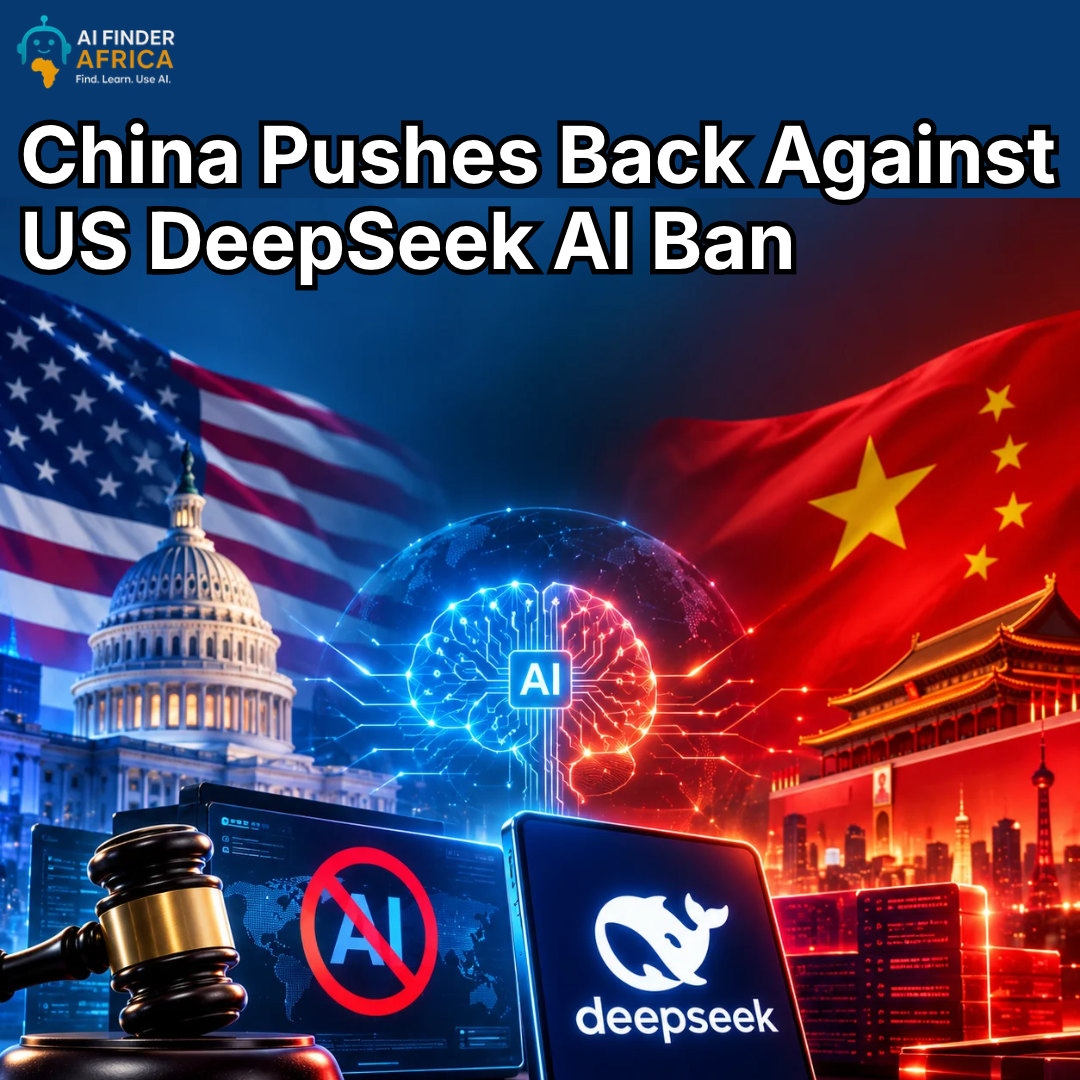
China Pushes Back Against US DeepSeek AI Ban
China Pushes Back Against US DeepSeek AI Ban
The battle for AI dominance between the United States and China is getting more complicated. This time, the disagreement is not just about who has the better AI model. It is about security, trust, and whether governments are using national security concerns to restrict foreign technology.
China has pushed back against a new US government order targeting DeepSeek, one of its most prominent artificial intelligence companies.
On Tuesday, October 20, Chinese Foreign Ministry spokesperson Mao Ning criticized the move, saying Beijing opposes the “overstretching” of national security and the politicization of science, technology and trade.
China also promised to protect the legitimate interests of its businesses.
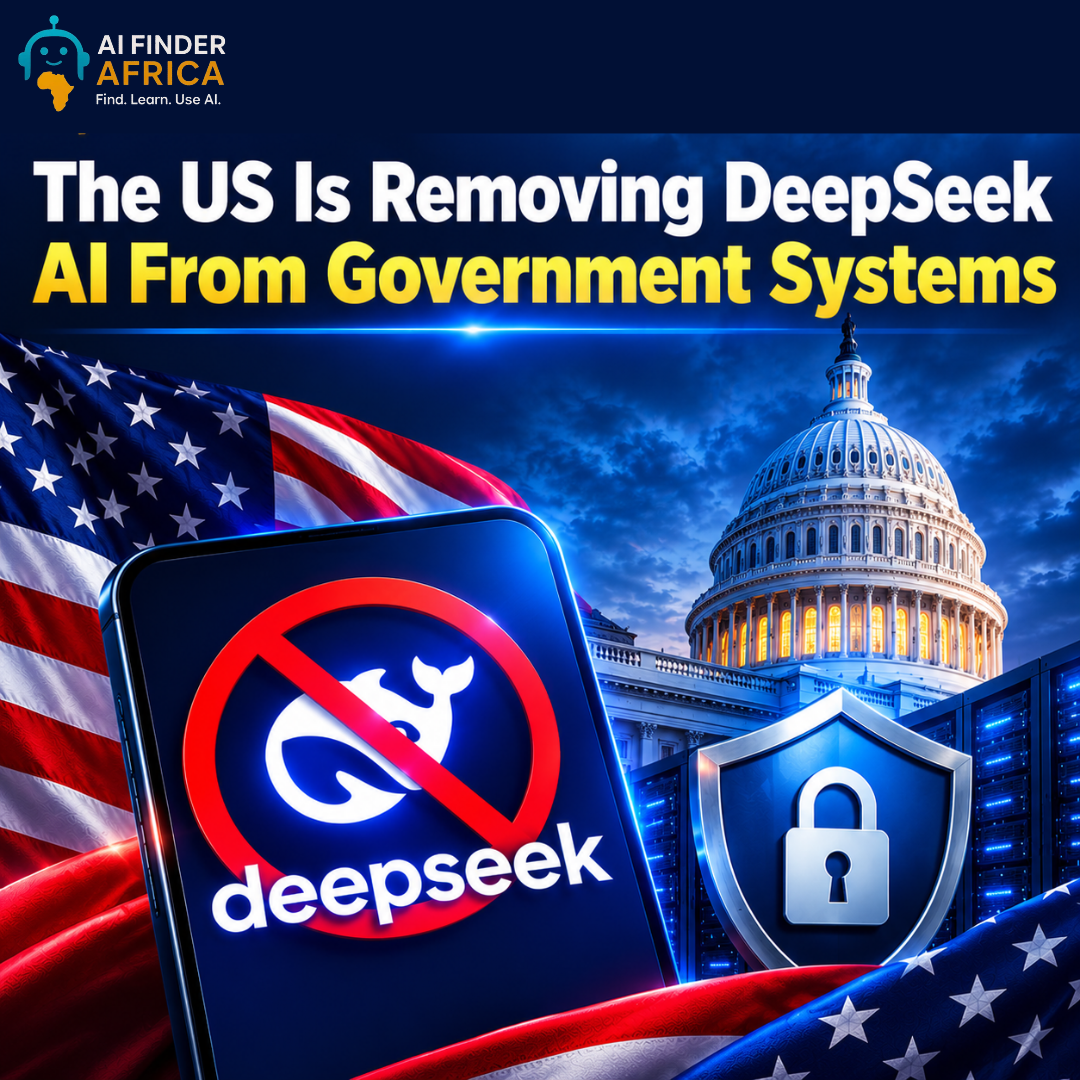
The response came just a day after the US Department of Homeland Security announced an order requiring federal civilian agencies to remove DeepSeek products from their IT systems and stop purchasing covered products and services.
So, why has DeepSeek become the center of another US-China technology dispute, and what does this mean for the future of AI?
Why Has the US Ordered DeepSeek Out?
The US government says the decision comes down to data security.
According to the Department of Homeland Security, using DeepSeek products could create a risk that sensitive information entered by government employees or contractors might be transferred to China.
The department raised concerns about DeepSeek’s operations in China, where authorities may have legal powers to access private company infrastructure.
Think about it this way: if a government employee uses an AI assistant to analyze a confidential document, the agency needs to know how that information is processed, where it goes, and who might be able to access it.
That is why AI security is becoming such a major issue for governments.
However, there is an important distinction: the US order reflects the government's security assessment. It does not, by itself, prove that every DeepSeek user’s information has been accessed by Chinese authorities or that every use of the technology has resulted in a security breach.
The restrictions apply to federal civilian agencies and cover DeepSeek products, affiliated entities, and certain third-party products and services developed using DeepSeek technology. Agencies may seek exceptions through the process set out in the order.
This is not a universal ban on DeepSeek for ordinary American users or private businesses.
China Says National Security Should Not Become an Excuse
Beijing is not accepting Washington’s reasoning without a fight. China argues that national security should not be used to politicize technology and trade. Its government has promised to defend Chinese companies against what it considers unfair restrictions.
From China's perspective, measures targeting a Chinese AI company risk becoming part of a wider effort to limit the country's technological growth.
The disagreement is happening against the backdrop of a much larger competition. Both countries want influence over the technologies likely to shape business, education, security and economic growth in the coming years.
AI is a particularly important part of that competition because the technology is developing rapidly, and companies are racing to build models that are more capable, affordable and useful.
The United States has raised security concerns about Chinese technology, while China has criticized US restrictions and accusations against its companies.
For now, the two sides remain far apart on how to balance AI innovation, international competition and national security.
How DeepSeek Changed the AI Conversation
DeepSeek became a global talking point in January 2025 after releasing its R1 reasoning model. The model drew attention for its performance and cost-conscious approach, challenging assumptions about how much money and computing power it takes to compete in advanced AI.
Its arrival also intensified competition for established players such as OpenAI and other leading AI developers.
DeepSeek continued developing its models. In April 2026, the company introduced its V4 preview, followed by V4-Flash, a smaller and faster option designed for more economical use.
These developments helped keep DeepSeek in the conversation as developers and businesses looked for alternatives to expensive AI services. But success has also brought scrutiny.
The US has accused DeepSeek and other Chinese AI companies of using a technique called model distillation to obtain capabilities from advanced American AI systems. Distillation uses outputs from one model to help train another.
The technique can be used legitimately. The dispute concerns allegations that some companies collected or used competitors’ model outputs without authorization.
Those accusations should be treated as allegations rather than established proof of wrongdoing in every case.
The larger issue is that AI competition now involves much more than releasing a chatbot. It also involves data, computing resources, intellectual property, infrastructure and the rules governing how technology can be used.
Could This Make the US-China AI Rivalry Worse?
The latest dispute adds another point of tension between the two countries.
The United States is concerned about the security implications of Chinese technology in government systems. China, meanwhile, argues that restrictions can unfairly disadvantage its companies and limit their access to international markets.
There are also signs that both countries recognize the need for some communication on AI-related risks. Reports say they agreed in September to establish a communication channel for AI incidents.


 Explore