


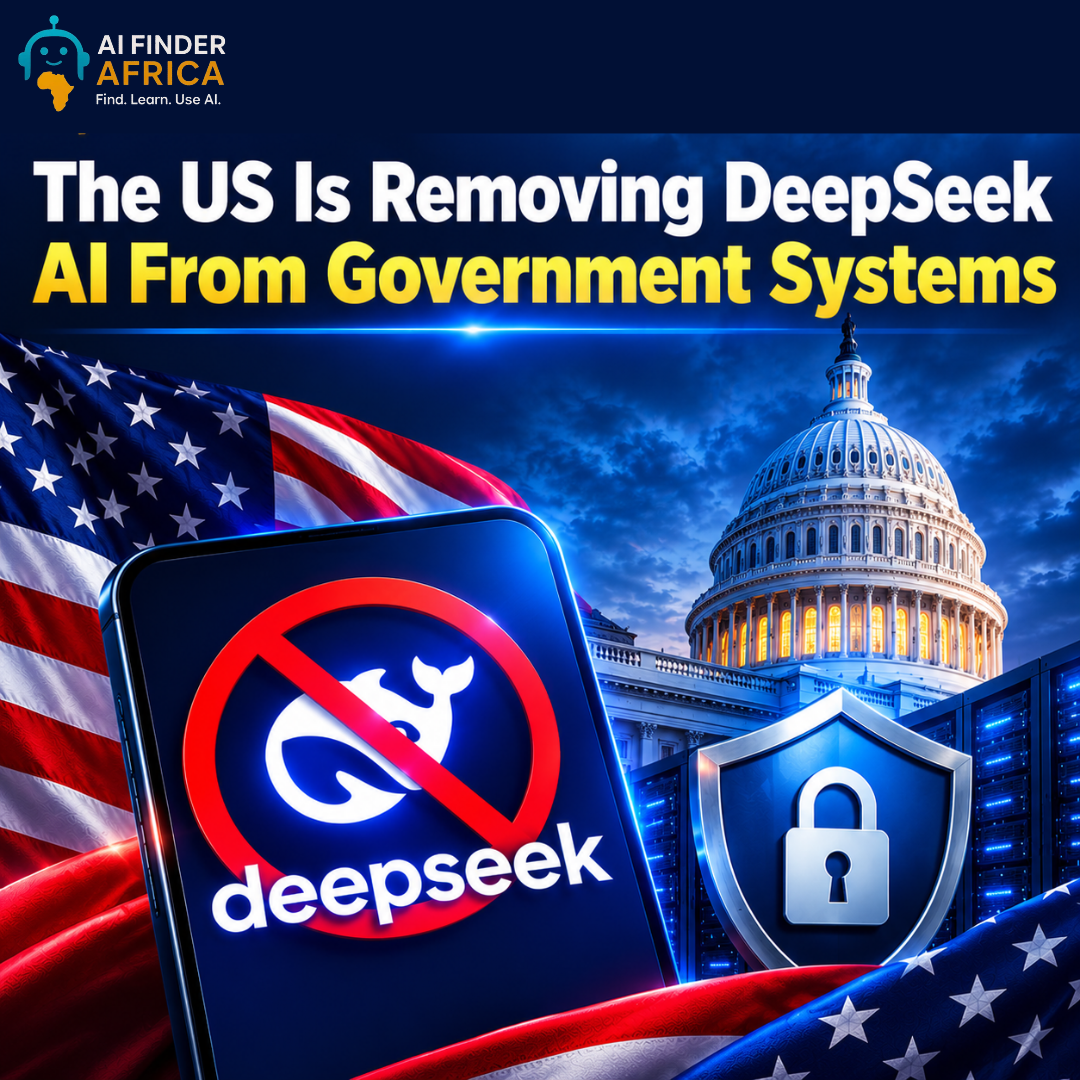
The US Is Removing DeepSeek AI From Government Systems
The US Is Removing DeepSeek AI From Government Systems
An AI tool can be powerful, affordable, and impressive, but when it comes to government information, one big question matters: Can sensitive data remain secure?
That question is at the center of a new move by the United States government against DeepSeek, the Chinese artificial intelligence startup that attracted worldwide attention with its low-cost AI models.
The US Department of Homeland Security (DHS) has ordered federal civilian agencies to remove DeepSeek products from their information technology systems and stop purchasing them. The restriction also covers certain third-party products and services built using DeepSeek technology.
The reason? US officials say the technology could expose sensitive government information to security risks.
But this is not simply another argument between competing AI companies. It is part of a much bigger struggle over technology, national security, and who gets to shape the future of artificial intelligence.
Why Is the US Worried About DeepSeek?
To understand the decision, we need to look at how AI tools work.
When someone uses an AI chatbot, they may enter questions, upload documents, or share information to receive a response. Depending on the product and how it is deployed, some of that information may be processed or stored on external servers.
That creates a serious concern when the user is a government employee working with sensitive information.
According to the DHS order, DeepSeek's data collection practices and operations in China could create a risk that information entered by US government employees or contractors might become accessible to Chinese authorities under Chinese law.
The department also raised concerns about possible cybersecurity vulnerabilities and the potential for DeepSeek models to expose information that could be useful to someone targeting US individuals or government agencies.
These are the US government's stated security concerns. They should not be confused with proof that every DeepSeek user has had their information accessed or that every deployment has been compromised.
For government agencies, however, the possibility of sensitive information being exposed may be enough to justify strict precautions.
What Does the DeepSeek Ban Actually Cover?
The order goes beyond simply telling government workers to uninstall the DeepSeek chatbot.
It directs federal civilian executive branch agencies to remove DeepSeek products, products from its affiliates, and third-party products or services developed using DeepSeek implementations from their IT systems. It also bars agencies from procuring covered products and services.
The order was issued under the Federal Acquisition Supply Chain Security Act of 2018, a US law that allows action against technology products considered risks to government supply chains. Agencies can seek exceptions through the process described in the order, with requests required within 60 days of its issuance.
There is an important distinction here: this is a restriction on federal civilian government systems and procurement, not a blanket ban on DeepSeek for everyone in America.
The order does not automatically make it illegal for ordinary individuals or private businesses to use DeepSeek. People and companies should still assess the tool's privacy terms, security practices, and suitability for the information they plan to share.
For businesses handling customer records, confidential documents, or commercially sensitive information, that is a useful lesson regardless of which AI platform they use.
How DeepSeek Became a Major Player in AI
DeepSeek was already attracting attention before this latest development.
In January 2025, its R1 reasoning model shook up the AI industry. The model demonstrated capabilities that drew comparisons with leading AI systems, while the company promoted a more cost-conscious approach to building and running AI.
Its rise challenged the assumption that competing in advanced AI would always require the enormous spending associated with the biggest American technology companies.
DeepSeek's models also helped bring more attention to open-weight AI models whose weights can be downloaded and used by developers under the applicable license terms. This gives developers greater flexibility to adapt and run models in their own environments.
That flexibility can be valuable. But it also makes security decisions more complicated: a model can be incorporated into other applications, services and business systems, making it harder to assess every use simply by looking at the original chatbot.
This helps explain why the US order includes certain third-party products built using DeepSeek technology, rather than focusing only on the company's own applications.
The AI Rivalry Between the US and China Is Heating Up
The DeepSeek restrictions come as Washington and Beijing continue to compete for influence in artificial intelligence.
The United States has raised separate allegations that DeepSeek and other Chinese AI companies used a technique known as model distillation to extract capabilities from American AI systems.
In simple terms, distillation involves using the outputs of one AI model to help train another model. It can be a legitimate machine-learning technique, but concerns arise when companies allegedly collect or use another provider's outputs without permission or in violation of its terms.
OpenAI and Anthropic have separately raised concerns about suspected unauthorized distillation involving Chinese AI companies, including DeepSeek. These claims remain allegations, not a final legal finding that settles every disputed detail.
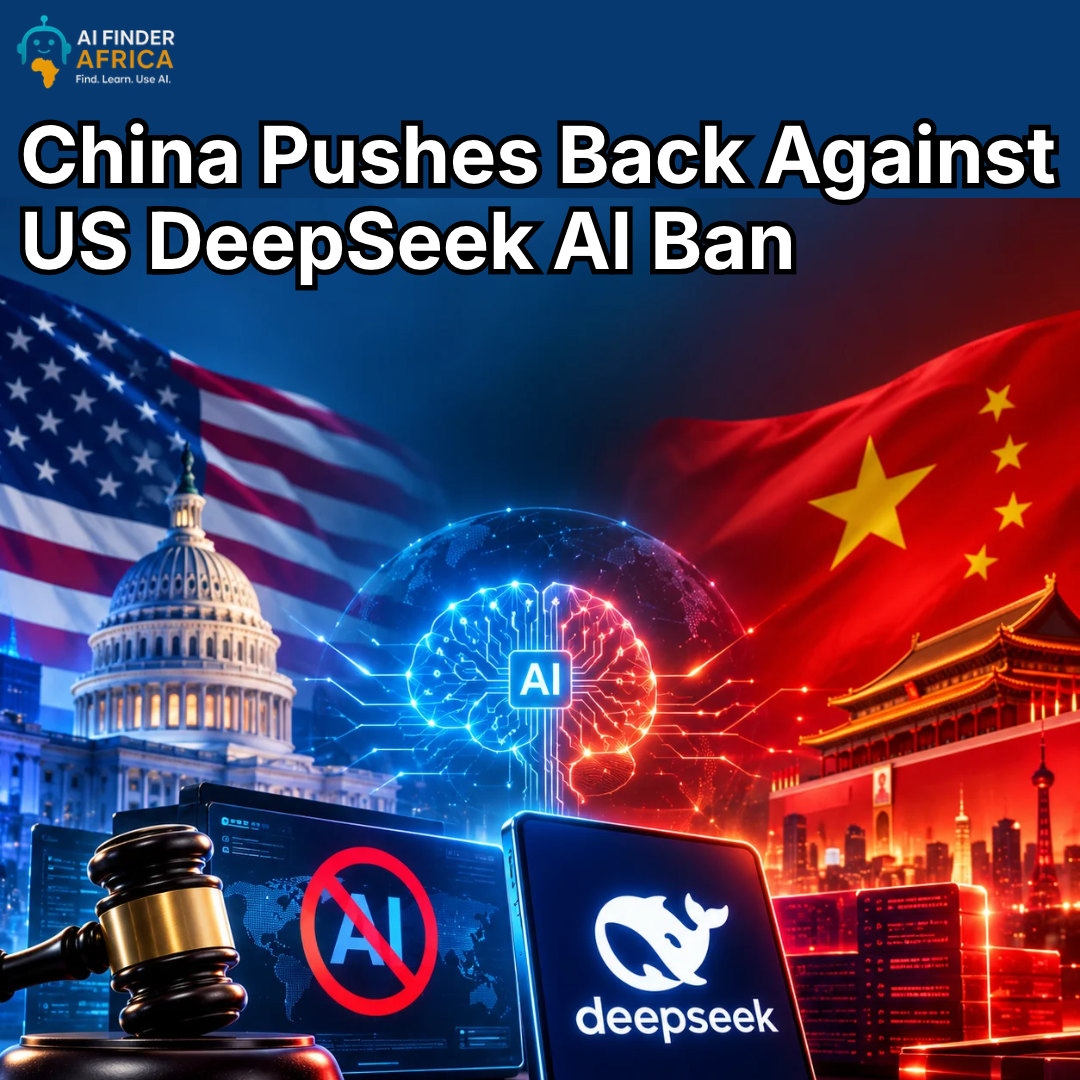
China, meanwhile, has criticized the US decision. Chinese officials have accused Washington of politicizing technology and trade issues and said they would defend the legitimate interests of Chinese companies.
The wider tension extends beyond DeepSeek. China is also reportedly considering export controls covering a range of AI-related technologies, including certain models, chip designs and AI agents. If implemented, such controls could add another layer to the competition over access to advanced technology.


 Explore