


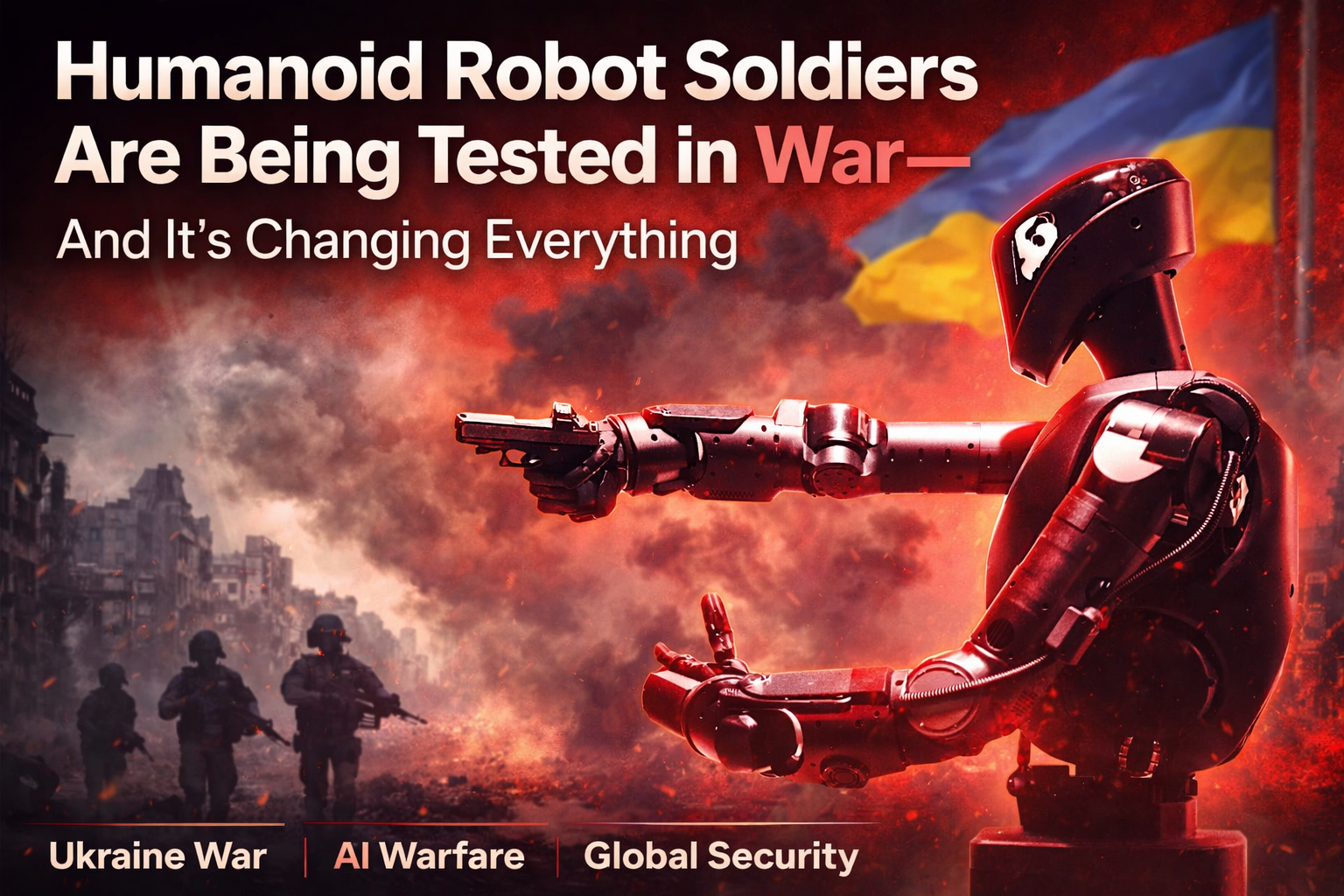
Humanoid Robot Soldiers Are Being Tested in War—And It’s Changing Everything
The Moment War Stopped Looking Human
It starts with a strange image.
Not soldiers.
Not tanks.
But humanoid machines standing, armed, and ready.
This isn’t a sci-fi movie.
It’s happening right now in Ukraine.
The Robots Have Arrived
In early 2026, a U.S. robotics startup called Foundation quietly sent two humanoid robots, the Phantom MK-1, to Ukraine.
Not for a demo.
Not for a lab test.
For the battlefield.
These robots are being evaluated in real combat conditions, marking one of the first known attempts to test humanoid “soldiers” in an active war zone.
What These Robots Can Actually Do
At first glance, they look like something out of a dystopian film: dark, human-shaped, almost intimidating.
But here’s what makes them powerful:
- They can navigate terrain built for humans (stairs, doors, tight spaces)
- They’re designed for reconnaissance and high-risk missions
- They can potentially handle weapons made for human soldiers
- They don’t get tired, scared, or injured
In fact, developers believe these robots could eventually take on the most dangerous roles in war, reducing human casualties.
One co-founder even argued there’s a “moral imperative” to send robots instead of people into deadly situations.
Why Ukraine?
If there’s anywhere pushing military tech to its limits, it’s Ukraine.
The war has already become a global testing ground for AI and robotics, with thousands of robotic missions happening monthly, many involving drones and ground robots.
Now, humanoid robots are the next phase.
And that changes everything.
But Here’s the Truth No One Is Saying Loudly
These robots are not fully autonomous.
Not yet.
Experts say they still:
- Require human oversight
- Struggle with balance and harsh environments
- Have limited real-world independence
So despite the headlines, we’re not in a “robot war” just yet.
But we’re getting closer.
The Bigger, Uncomfortable Question
This isn’t just about technology.
It’s about what happens when war becomes… easier.
If robots replace soldiers: Does war become more frequent? Who is responsible when AI makes a mistake, and how much control should machines really have?
Because once the barrier of human risk is removed, the rules of conflict could change completely.
Where This Is Heading
The companies building these systems aren’t slowing down.
New versions like the Phantom MK-2 are already in development, stronger, smarter, and more capable.
And governments? They’re watching closely.
Because this isn’t just innovation.
It’s the beginning of a new kind of arms race, one powered by AI.
The Real Story
This isn’t just about robots in Ukraine.
It’s about a shift.
From human-led warfare…
To machine-assisted decisions…
To a future where the line between both starts to disappear.
And once that line is gone?
There’s no going back.



 Explore