


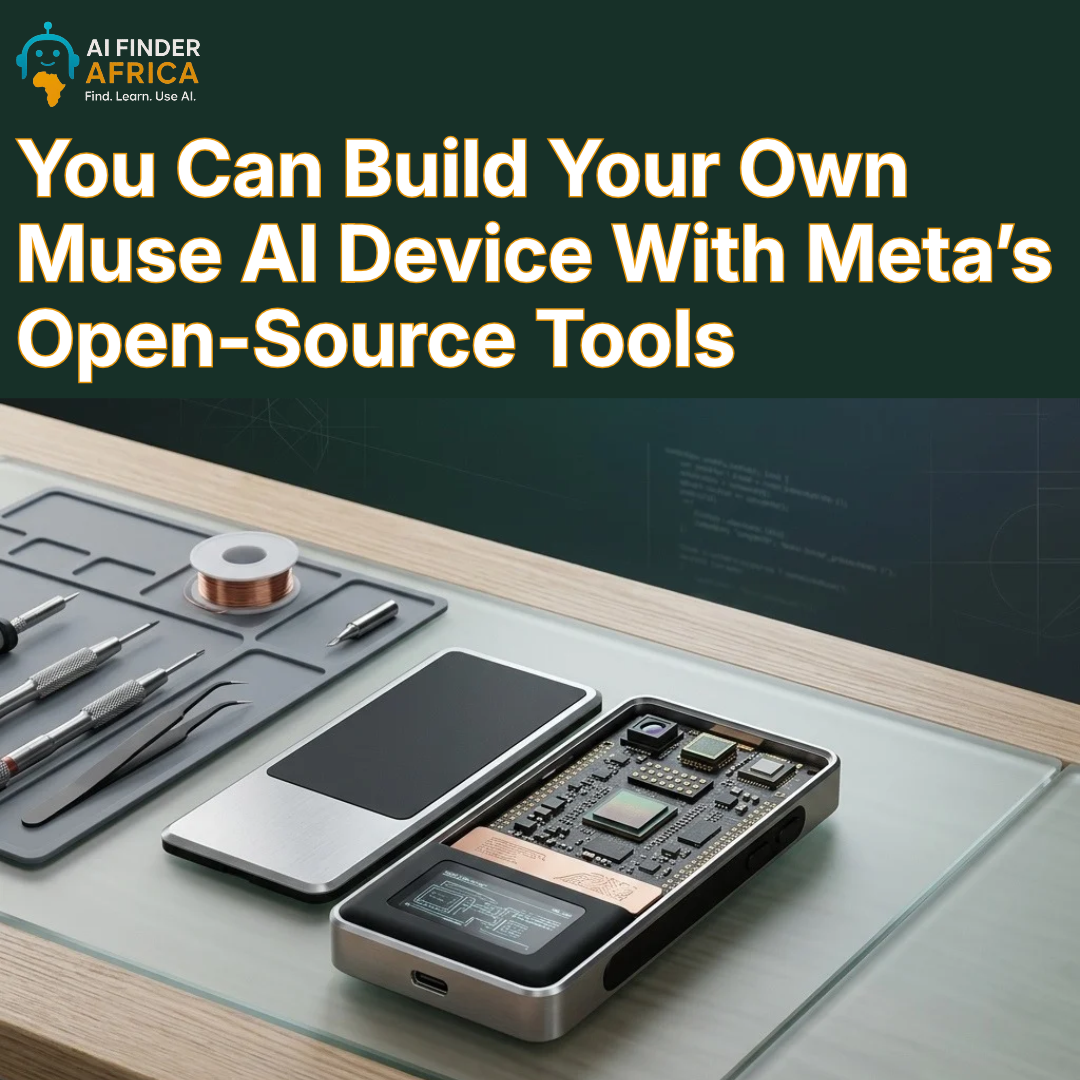
You Can Build Your Own Muse AI Device With Meta’s Open-Source Tools
You Can Build Your Own Muse AI Device With Meta’s Open-Source Tools
Meta has released open-source firmware and device software development kits that allow people to connect Muse to hardware such as Raspberry Pi computers and ESP32 boards.
From there, developers can add displays, microphones, speakers, buttons, sensors, and other hardware.
Meta's official project page even suggests ideas such as putting Muse on a color e-ink display, creating a small touchscreen device, or building an HDMI stick that connects Muse to a television.
In simple terms, Meta is saying: Do not just use Muse. Build something around it.
The open-source project is released under the Apache 2.0 licence, giving developers a foundation they can experiment with and contribute to. Meta has also created a Discord community where people can share projects and get help.
Meta Already Built One
Meta did not stop at releasing the tools. The company also created its own hardware called Muse Home Link.
It is a small USB-C device designed to connect Muse to your home Wi-Fi network. Once connected, Muse can communicate with compatible smart devices through community-built integrations. That could mean asking Muse to do things like turn on a light, control a TV, or send a document to a printer, depending on the setup.
The device itself is built around an ESP32-C5 chip and supports Wi-Fi 6. But there is a catch.
The free Home Link offer is currently limited to Muse subscribers in the United States, with one device per subscriber while supplies last. Meta says it will ship in October, and claiming a place on the waitlist does not guarantee an order.
So, no you cannot simply sign up from anywhere in the world and expect one to arrive.
And This Is Bigger Than a Hobby Project
At first glance, Muse Gadgets might sound like something designed for developers who enjoy taking apart electronics on weekends. But there is a bigger strategy behind it.
Meta is trying to turn Muse from an AI assistant you chat with into an AI agent that can actually operate across your digital and physical world.
Muse already goes beyond answering questions. Meta designed it to take actions such as sending emails, booking travel, and working across connected services. It runs inside a dedicated virtual machine and can interact with apps and websites on a user's behalf.
Now Meta is expanding where that agent can live.
Your phone. Your computer. Your smart glasses. Your business tools.
And potentially, devices you build yourself.
Meta Is Also Coming for Small Businesses
The timing is not accidental.
Just days before Muse Gadgets, Meta introduced Muse for Small Business, allowing businesses to connect Muse with tools including Shopify, Canva, Dropbox, Slack, Notion, QuickBooks, Stripe, Zoom, and more. Muse can also connect with Facebook Pages, Instagram professional accounts, and Meta advertising accounts.
That means Meta is pushing Muse in two directions at once: Personal life and business.
And the company has gone even further with the launch of Meta Enterprise Platform, a new business initiative focused on bringing products such as Muse, Muse API, Muse Code, and Meta Business Agent to companies and developers.
The Bigger Picture
The interesting part about Muse Gadgets is not the Raspberry Pi. It is the idea behind it.
For years, AI mostly lived inside apps. You opened an app, typed something, and waited for an answer.
Agentic AI is changing that relationship. AI is increasingly expected to do something.
And Meta now appears to be asking a much bigger question: What happens when AI can live anywhere?
A tiny screen on your desk. A device beside your TV. A smart-home controller. A custom gadget built by a developer in Lagos.
Or something nobody has thought of yet.
That last part may be exactly what Meta wants.
Instead of designing every possible AI device itself, it is opening the door for developers to experiment and build the next generation of Muse-powered hardware.
And if those experiments take off, your next AI device might not come from Meta at all. You might build it yourself.
AI is no longer just something you open. It is becoming something you can build around.



 Explore