

Mauritius Didn’t Wait for AI Problems, It Solved Them First
While many countries are sprinting to build artificial intelligence, Mauritius just hit pause and asked a bold question:
“What if we get the rules right before things go wrong?”
That question is now shaping one of the most interesting AI stories coming out of Africa.
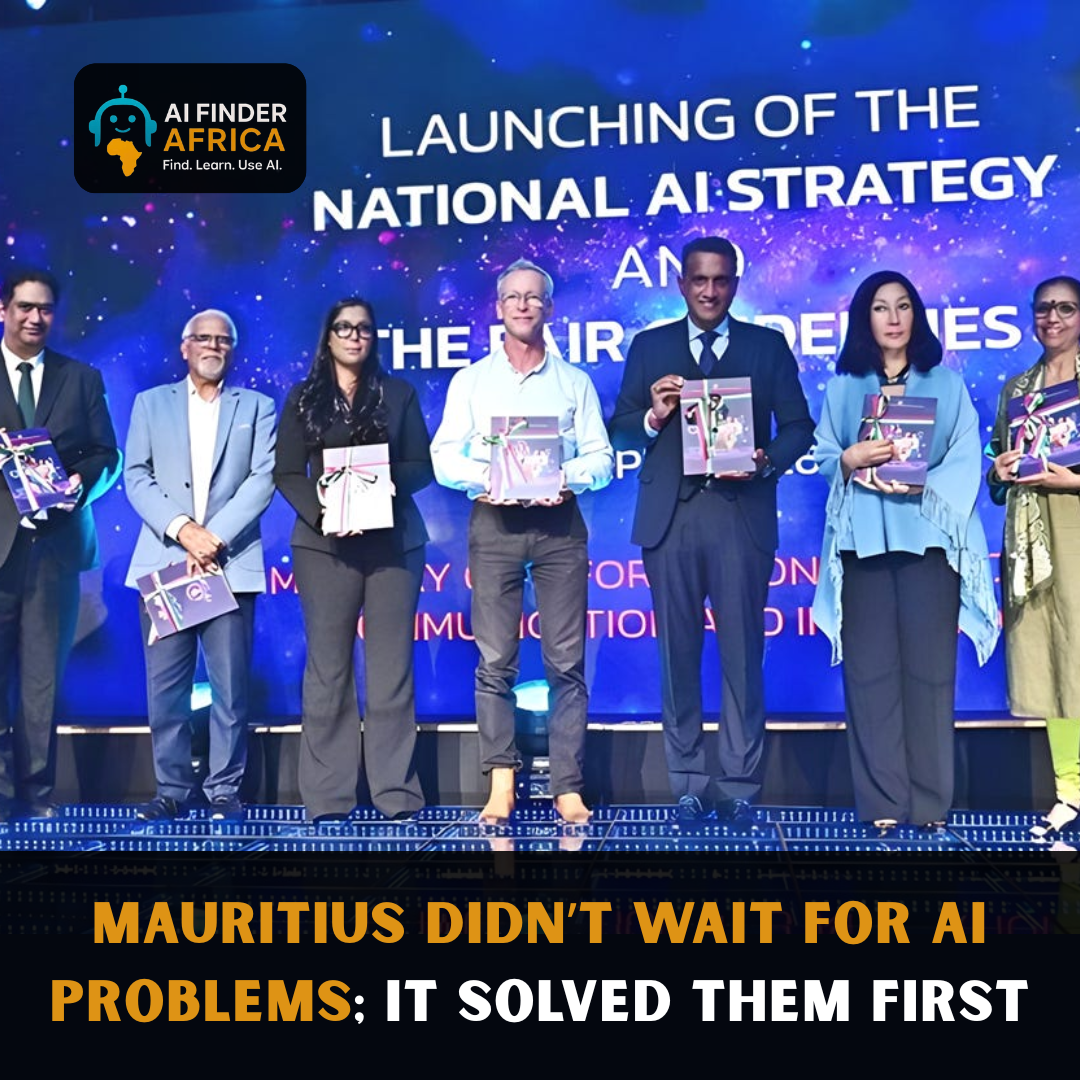
In April 2026, Mauritius rolled out its National AI Strategy (2025–2029) alongside something even more powerful, a guiding compass called the FAIR framework.
And no, this isn’t just another policy document gathering dust. This one is different.
The Big Idea: Ethics First, Innovation Second
Most countries treat AI ethics like a seatbelt: important, but added after the car is built.
Mauritius flipped that logic.
At the heart of its strategy is the FAIR framework, which stands for:
- Fairness
- Accountability
- Inclusiveness
- Integrity (and Responsibility)
These aren’t buzzwords; they are rules that apply to every stage of AI, from design to deployment… and even when systems are retired.
In simple terms:
If an AI system touches people’s lives in Mauritius, it must play by these rules.
Not Just Talk, Real Expectations
Here’s where it gets interesting.
Mauritius isn’t just saying “build ethical AI.” It’s setting expectations that actually affect how companies operate:
- AI systems must be transparent and explainable
- High-risk tools (like fintech or gaming AI) may need bias audits
- Even foreign companies must appoint local representatives to be held accountable
So yes, if your AI causes harm, you can’t hide behind borders.
Wait… Is It Even Law Yet?
Here’s the twist:
Right now, the FAIR guidelines are not fully binding laws.
But don’t mistake that for weakness.
They’re designed as a foundation, a playbook that will shape future regulations, government procurement rules, industry standards, and eventually, legislation.
Think of it as “soft power now, hard law later.”
Why This Matters (Especially in Africa)
Across Africa, countries are racing to figure out AI:
- Some focus on infrastructure
- Others on innovation ecosystems
- A few on strict regulation
Mauritius is taking a fourth path: governance-first AI.
Instead of asking, “How fast can we build?" it's asking, "How safely can we scale?”
And that might just be the smarter long-term bet.
Beyond Policy: A Bigger Vision
This isn’t just about avoiding AI disasters.
Mauritius is positioning itself as:
- A trusted AI hub
- A people-centred digital economy
- A country where innovation and responsibility grow side by side
It’s also rolling out real-world tools like AI-powered public services and digital platforms to bring this vision to life.
The Bottom Line
Mauritius just sent a clear message to the world:
AI isn’t just about what we can build; it is about what we should build.
And in a time where AI is moving faster than regulation, that mindset might be exactly what the global tech ecosystem needs.



 Explore