


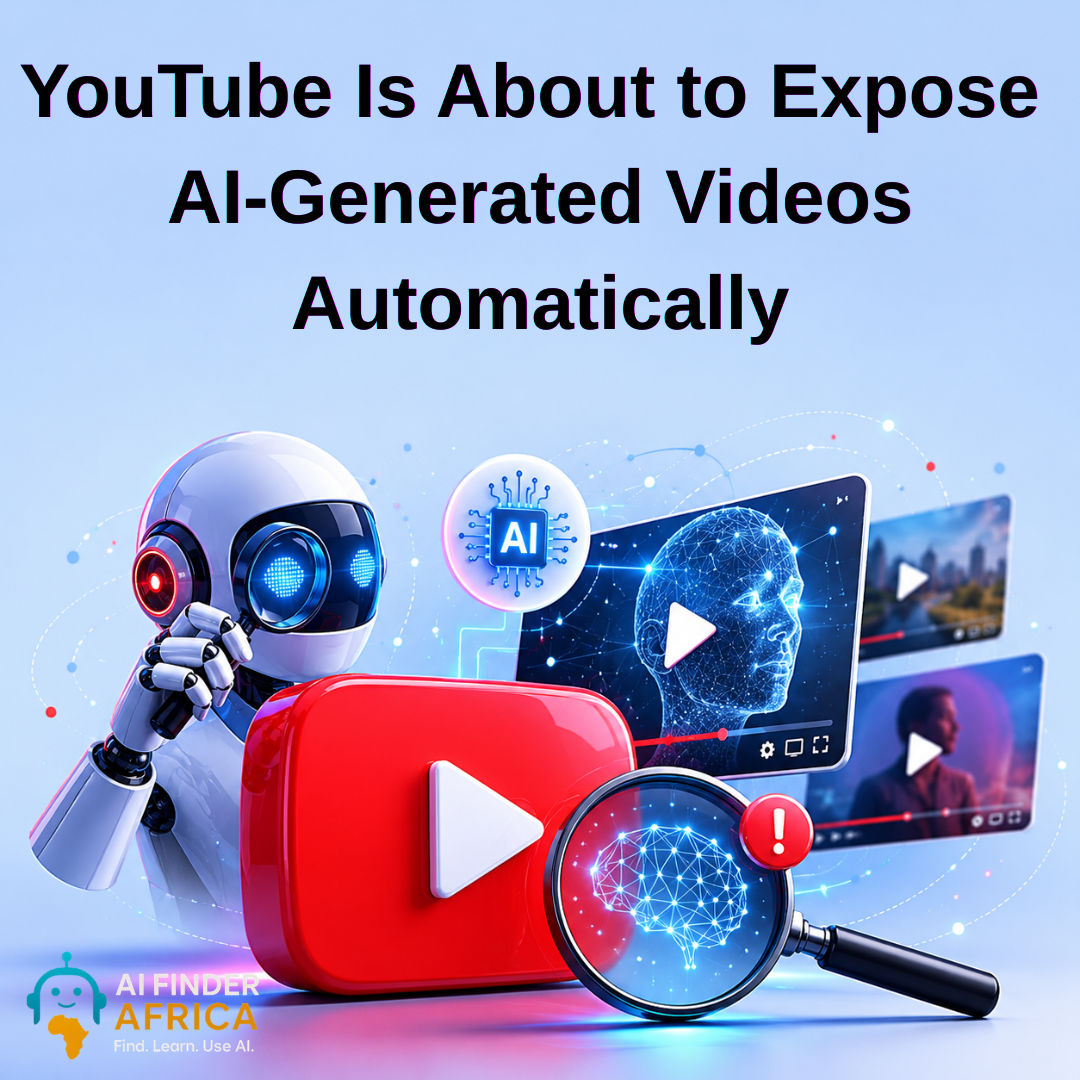
YouTube Is About to Expose AI-Generated Videos Automatically
YouTube Is About to Expose AI-Generated Videos Automatically
A few years ago, spotting AI-generated content was easy.
The images had extra fingers. The videos looked awkward. The voices sounded robotic.
Today? Many people can no longer tell the difference.
Artificial Intelligence has evolved so quickly that a realistic AI-generated video can now look almost identical to something filmed by a real person. Whether it's a politician giving a speech, a celebrity making a statement, or a breaking-news clip, the line between reality and synthetic content is becoming increasingly blurred. And YouTube has finally decided to do something about it.
The world's largest video platform has announced that it will soon begin automatically detecting and labeling certain AI-generated content, even when creators fail to disclose that AI was used. That may sound like a small update. It isn't.
This could become one of the most significant changes in the history of online content.
The Problem Is Getting Bigger Than YouTube
The internet is currently experiencing what many experts describe as a synthetic media explosion.
Every day, millions of AI-generated images, videos, voice recordings, and digital avatars are uploaded across social media platforms.
Some are harmless. Some are entertaining. Some are educational.
But others can be misleading.
As generative AI tools become more advanced, realistic fake content is becoming easier and cheaper to create than ever before. What once required a Hollywood studio can now be produced from a laptop.
That reality has raised concerns among governments, technology companies, journalists, and researchers worldwide. How do you know what is real anymore?
And more importantly:
How do platforms help viewers understand what they are looking at?
YouTube Is Changing the Rules
Until now, YouTube largely relied on creators to tell viewers when AI has been used.
The company introduced disclosure requirements in 2024, asking creators to self-report realistic AI-generated content.
The system was simple. Creators were expected to be honest.
The problem? Not everyone was.
And as AI-generated videos became more sophisticated, relying solely on self-reporting started to look increasingly outdated. That is why YouTube is now taking a different approach.
According to the company, if its systems detect significant photorealistic AI-generated content and a creator has not disclosed it, YouTube will automatically apply an AI label to the video.
In other words:
The platform itself will become the referee.
Why This Matters Right Now
The timing of this announcement is no coincidence.
Over the past year, AI video generation has experienced a dramatic leap forward. New tools are capable of generating cinematic scenes, realistic human expressions, lifelike voiceovers, and highly convincing environments.
Platforms such as Google's Veo and ByteDance's Seedance have demonstrated how quickly AI-generated video quality is advancing. The result?
A growing number of videos that look completely authentic despite being entirely generated by machines.
For viewers, that creates a challenge. When a video appears realistic, people naturally trust what they see.
But in the AI era, appearances can be deceiving. That is exactly what YouTube is trying to address.
The New Labels Will Be Harder to Ignore
One criticism of previous AI disclosures was that most users never noticed them.
The information often appeared in places viewers rarely checked, such as video descriptions. YouTube now plans to make AI labels much more visible.
The goal is simple:
Provide context before viewers make assumptions.
Instead of forcing users to investigate whether content is real, the platform wants to make that information available upfront. For audiences, that could become increasingly important as AI-generated content continues to flood the internet.
What Happens If YouTube Gets It Wrong?
Of course, no AI detection system is perfect. Even YouTube acknowledges that.
That is why creators will be allowed to challenge labels they believe have been applied incorrectly.
If a creator feels a video was unfairly flagged as AI-generated, they can dispute the decision through YouTube's review process.
The company also says these labels will not affect recommendations, visibility, or how the algorithm promotes content. At least for now. The labels are intended to improve transparency, not punish creators.
The Real Story Isn't About AI
Ironically, this story is not really about Artificial Intelligence. It is about trust.
For decades, videos served as one of the strongest forms of evidence online. People trusted what they could see.
But AI is changing that relationship. The internet is entering an era where seeing is no longer believing. Platforms must now find ways to preserve trust while embracing new technology.
That balancing act may define the next chapter of the digital age.
And YouTube's latest move shows that major tech companies are beginning to recognize the challenge.
Because the future won't be shaped by whether AI content exists. That battle is already over.
The future will be shaped by whether people can tell the difference between what's real and what's generated.
And that may become one of the most important questions on the internet.



 Explore