


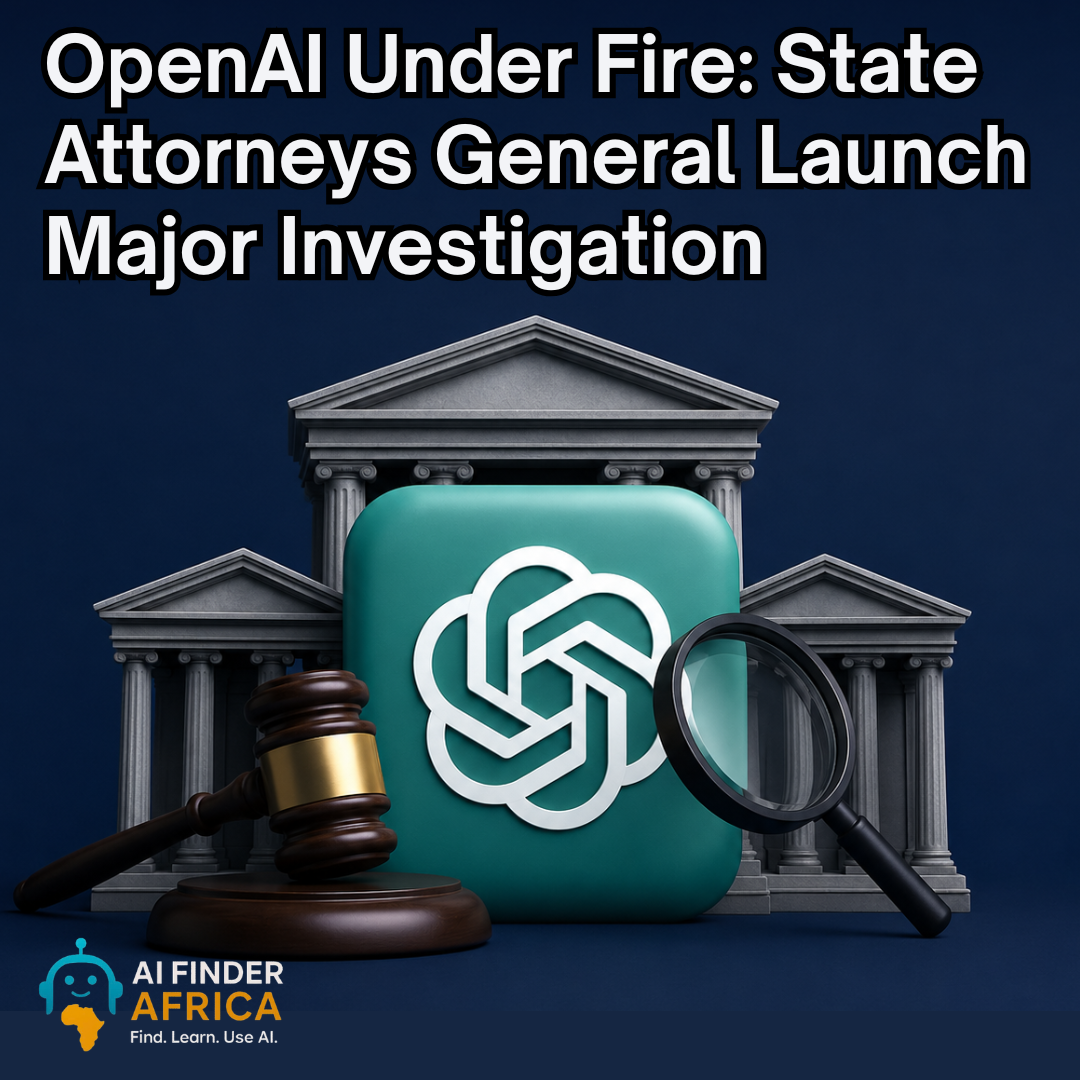
OpenAI Under Fire: State Attorneys General Launch Major Investigation
OpenAI Under Fire: State Attorneys General Launch Major Investigation
For years, OpenAI has been the poster child of the artificial intelligence revolution.
Its flagship product, ChatGPT, transformed how millions of people work, learn, create content, write emails, and even seek advice. The company became one of the fastest-growing technology firms in history, helping spark a global AI race that has reshaped industries almost overnight.
But now, the company that helped put AI into everyone's hands is finding itself under a very different spotlight.
A coalition of U.S. state attorneys general has launched an investigation into OpenAI, raising serious questions about how the company handles user data, protects vulnerable users, and designs its AI systems.
And the timing could not be more dramatic.
The investigation comes just days after OpenAI confidentially filed paperwork for a potential Initial Public Offering (IPO). This move could make it one of the most valuable publicly traded technology companies in history.
What Triggered the Investigation?
According to multiple reports, New York's Attorney General served OpenAI with a subpoena requesting documents covering a wide range of topics. Investigators are reportedly examining:
- Advertising practices
- User engagement and retention strategies
- Consumer and health data handling
- Protection of minors and senior citizens
- Internal AI policies
- The behavior of OpenAI's models, including concerns about "sycophancy" when AI becomes overly agreeable or reinforcing toward users.
While regulators have not publicly disclosed all the states involved, reports suggest the inquiry could be one of the broadest state-led investigations ever directed at an AI company.
Why Are Regulators Suddenly Paying Attention?
The answer is simple: AI is no longer an experiment.
ChatGPT and similar tools are now being used by hundreds of millions of people worldwide. As AI becomes more deeply woven into everyday life, governments are asking a difficult question:
What happens when AI gets something wrong?
Over the past year, OpenAI has faced growing criticism and legal challenges tied to concerns about mental health, misinformation, user safety, and harmful chatbot interactions. The company is also dealing with multiple lawsuits, including allegations related to copyright infringement and claims that AI-generated interactions contributed to dangerous situations involving vulnerable users.
In Florida, Attorney General James Uthmeier recently filed a lawsuit against OpenAI and its CEO, Sam Altman, alleging that the company failed to adequately address safety concerns involving children and other young users.
For regulators, the central concern is not just whether AI is powerful.
It is whether it is being deployed responsibly.
OpenAI's Response
OpenAI is not backing down.
In a statement, the company said it takes the concerns seriously and plans to cooperate with investigators. The company emphasized that it is working to bring AI benefits to people "in a responsible way."
OpenAI also highlighted several safety measures it says are already in place, including:
- Age prediction systems
- Parental control tools
- Additional protections for minors
- Features that direct users experiencing distress toward real-world support resources
- Restrictions on advertising aimed at children
The company argues that as AI evolves, its safety systems must evolve alongside it.
The IPO Complication
What makes this story particularly fascinating is the timing.
Just days before news of the investigation emerged, OpenAI confirmed that it had confidentially filed for an IPO. The move signals the company's intention to eventually become publicly traded, joining a growing list of AI firms seeking access to Wall Street capital.
Going public is already complicated. Doing it while facing regulatory scrutiny is even harder.
Investors typically want clarity, stability, and predictability. Investigations create uncertainty, and uncertainty can influence how investors value a company. Whether this probe becomes a minor speed bump or a major obstacle remains to be seen.
The Bigger Story: AI's Accountability Era Has Arrived
This investigation is about more than OpenAI. It is about the future of artificial intelligence itself.
For years, AI companies raced to build bigger models, faster systems, and smarter chatbots. Now regulators are racing to catch up.
The questions being asked today about OpenAI could eventually be asked of every major AI company:
- How is user data collected and stored?
- Are children adequately protected?
- Can AI systems cause psychological harm?
- Who is responsible when AI-generated advice leads to real-world consequences?
- How transparent should AI companies be about their products?
These are not just OpenAI problems. They are industry problems.
And regulators appear increasingly determined to find answers.
What Happens Next?
For now, the investigation is still in its early stages.
No findings have been announced, and OpenAI has not been accused of wrongdoing in connection with the subpoena itself. Investigators are gathering information and evaluating how the company operates.
But one thing is clear:
The AI industry has entered a new chapter. The race is no longer just about building the most powerful AI. It's also about proving that those systems can be trusted.
And for OpenAI, one of the most influential companies of the AI era, that may turn out to be the most important challenge yet.



 Explore