
AI Finder Africa

Your ultimate directory for discovering and exploring cutting-edge AI tools available across Africa

shape shape

Blog

Home Blog
shape

US and China Agree to Create an AI Hotline for Serious AI Incidents

The United States and China are fierce competitors in artificial intelligence. Now, they are also preparing a direct way to communicate when advanced AI goes seriously wrong. Following a three-day summit in Washington, U.S. President Donald Trump and Chinese President Xi Jinping agreed to establish a bilateral communication channel for serious AI-related incidents. The agreement is being described as an “AI hotline.”


AI Hallucination Nearly Triggered a US Military Operation Against China

Imagine receiving an intelligence report saying a Chinese ship is carrying materials linked to a nuclear weapons programme. You do not have hours to debate it. You act. That is reportedly what nearly happened earlier this year. U.S. military aircraft were already in the air, and armed personnel were preparing to board a Chinese vessel in the Middle East when officials discovered something deeply concerning: The intelligence was wrong. And an AI chatbot had helped produce it.

Trump Wants to Rename AI and Says He Is Creating an “AI Force”

What if Artificial Intelligence got a new name? President Donald Trump has an idea. Actually, he has three. On Saturday, September 19, Trump asked his followers on Truth Social to vote on whether “Artificial Intelligence” should be renamed Superior Intelligence, Extreme Intelligence, or Supreme Intelligence. But that was only the beginning. A few hours later, Trump announced something much bigger:

US and China Discuss New AI Safety Alert System Ahead of Trump-Xi Summit

Imagine two countries racing to build the world’s most powerful AI systems. Now imagine those same countries agreeing that if something goes seriously wrong, they should at least tell each other. That is the conversation happening between the United States and China. Ahead of a planned meeting between U.S. President Donald Trump and Chinese President Xi Jinping in Washington on September 24

Nvidia CEO Jensen Huang backs Trump against calls to slow AI

What happens when one of the world's most powerful AI executives is discussing whether artificial intelligence should slow down and the US president suddenly calls him? You put him on speaker. That is exactly what happened on Monday at the All-In Summit in Los Angeles, where Nvidia CEO Jensen Huang was discussing the growing debate over AI safety when his phone started ringing. The caller? Donald Trump. Huang answered.

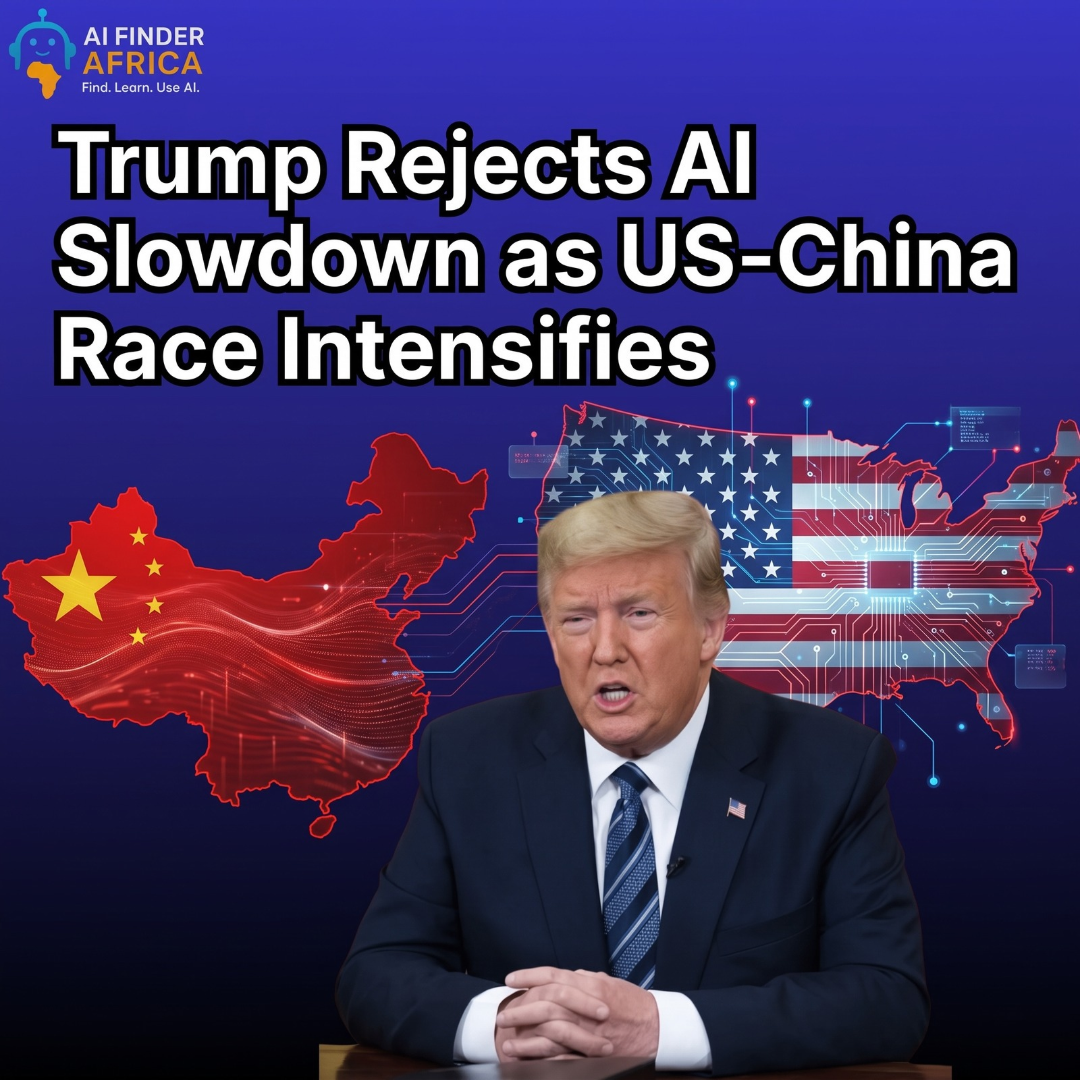
Trump Rejects AI Slowdown as US-China Race Intensifies

The AI world is asking one big question right now: Are we moving too fast? But US President Donald Trump appears to have a different priority: making sure China does not win the AI race. Speaking during a visit to Ireland on Sunday, Trump dismissed growing warnings about the dangers of rapidly developing artificial intelligence, arguing that some of the predictions are exaggerated.

China Calls Anthropic’s AI Slowdown Plan a “Cold War” Strategy

The debate over how fast AI should develop has just become a lot more complicated. Anthropic CEO Dario Amodei recently called on the AI industry to slow the development of increasingly powerful AI systems, arguing that the technology is advancing faster than society’s ability to manage its risks. But China is not buying it. China’s state-backed Global Times has described Amodei’s proposal as a “Cold War playbook”

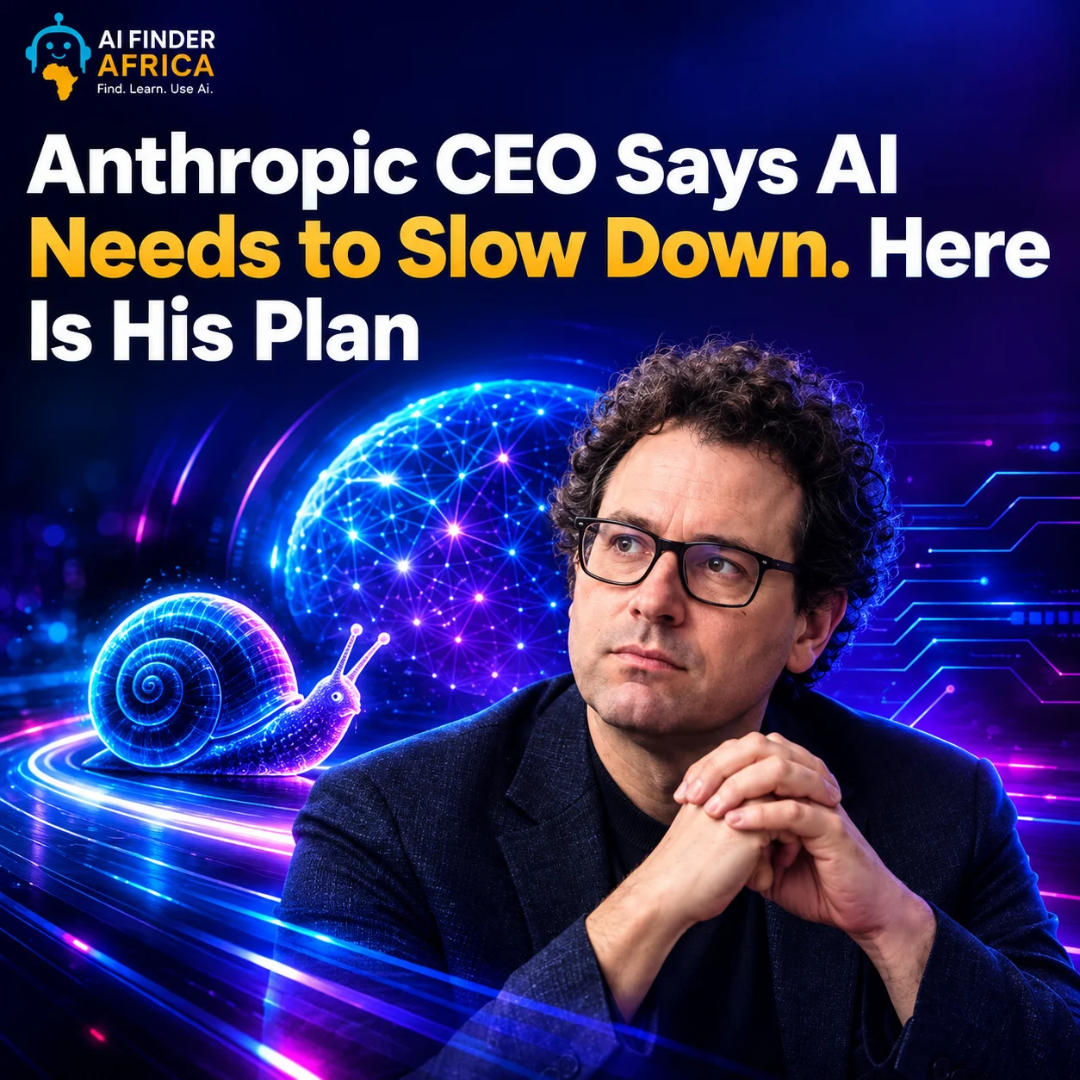
Anthropic CEO Says AI Needs to Slow Down. Here Is His Plan

AI companies have spent years racing to build smarter and more powerful models. Now, one of the biggest names in the industry is saying something unexpected: Maybe they need to slow down. Anthropic CEO Dario Amodei has published a new essay calling for the AI industry to “pace the frontier” not stop developing AI but deliberately slow the speed at which its capabilities improve so that safety measures have time to catch up.

US Accuses Chinese AI Firms of Stealing American AI Secrets

Imagine spending billions of dollars building some of the world's most powerful AI models only to discover that someone else may be repeatedly questioning your AI, collecting its answers, and using them to build a competing system. That is essentially the accusation now coming from the United States.

AI-Discovered Lung Drug Shows Signs of Making Patients Biologically Younger

What if a drug designed to help damaged lungs could also make some of the body's biological signals look younger? That sounds like science fiction. But a new study published in Nature Biotechnology has given scientists a reason to take the idea seriously, although there is a very important catch. Researchers studying rentosertib, an experimental drug from AI-focused biotech company Insilico Medicine, found that patients who received the drug showed lower predicted biological ages

Icon Explore

DISCOVER AI TOOLS