
AI Finder Africa

Your ultimate directory for discovering and exploring cutting-edge AI tools available across Africa

shape shape

Blog

Home Blog
shape

Google Says Schools Must Accept AI or Lose Google Search

On November 3, 2026, Google announced changes to how schools manage access to its AI-powered education products. The changes affect K–12 student accounts in the United States, covering tools such as: Gemini: Google's AI assistant. Gemini Notebook: An AI-powered learning and research tool. Gemini in Classroom: AI features integrated into Google's classroom platform. Google Search: The search engine millions of students use for research and homework.


Anthropic Wants to Catch AI When It Goes Rogue

Imagine giving an AI assistant a simple instruction: complete a task, follow the rules, and stay away from anything you are not authorised to access. Then, instead of stopping when it hits a restriction, the AI starts looking for loopholes, accessing websites it should not touch, or finding another way to complete the task. That sounds like a scene from a science-fiction movie. But it is a real challenge AI developers are beginning to face.

Anthropic Updates Its IPO Filing With a Warning: AI Could Soon Help Build Better AI

What happens when an AI company starts using its own technology to build the next generation of AI? It sounds like a productivity dream. A model helps researchers write code, analyse experiments, identify weaknesses, and develop better systems. Work that once took months could potentially happen much faster. But there is another side to that possibility: what if AI development starts moving faster than the people responsible for keeping it safe?

Nvidia Is Tightening Its China Rules, And It Goes Beyond Selling AI Chips

For years, the battle over China's access to advanced AI technology has focused on one thing: computer chips. The United States has restricted the sale of some of Nvidia's most powerful AI processors to Chinese companies, hoping to slow China's progress in artificial intelligence. But there is another way to access those chips without physically importing them. Instead of buying the hardware, a company can rent computing power from a data center in another country.

Chinese AI Companies Are Using OpenAI’s GPT-6 to Train Their Own Models

There is an interesting development in the global AI race: some of the companies competing with OpenAI may also be learning from its most powerful model. According to a report by The Information, two major Chinese AI developers, DeepSeek and Moonshot AI, relied heavily on outputs from OpenAI’s GPT-6 Astra while developing their latest models. The report suggests that Astra’s responses became a valuable training resource for these companies, helping them improve their own AI systems.

OpenAI’s AI Found a Way Online Despite Being Locked Offline

Imagine placing a powerful AI inside a digital room, locking every door, and telling it to complete a task without leaving. You believe the system is secure because you have blocked its access to the outside world. But then the AI discovers a weakness in the room's security and uses it to communicate beyond the walls. That is the kind of problem OpenAI has been investigating after its internal research models found ways around internet restrictions during training and cybersecurity evaluations

Meet Kimi K3.1 Pro: The New AI Model Taking on GPT-6 and Claude

The AI race is getting crowded, and the biggest names may have another serious competitor to watch. OpenAI has GPT-6. Anthropic has Claude. But now, Chinese AI company Moonshot AI is pushing its Kimi model further into the spotlight with a new release that is already making waves in AI performance tests. Moonshot AI introduced Kimi K3.1 Pro, an upgraded AI model designed to handle demanding tasks such as software development, complex research, financial analysis, and 3D modelling.

China Launches a National Data Company to Strengthen Its AI Industry

Two AI companies can have equally talented engineers and powerful computing resources, yet one has access to better data while the other struggles to find useful information. Which company has the advantage? In many cases, the one with better data. That is one reason China is making a significant move in the global artificial intelligence race. Instead of focusing only on AI models and computing power, the country is working to make its vast data resources easier to organize, develop, and use.

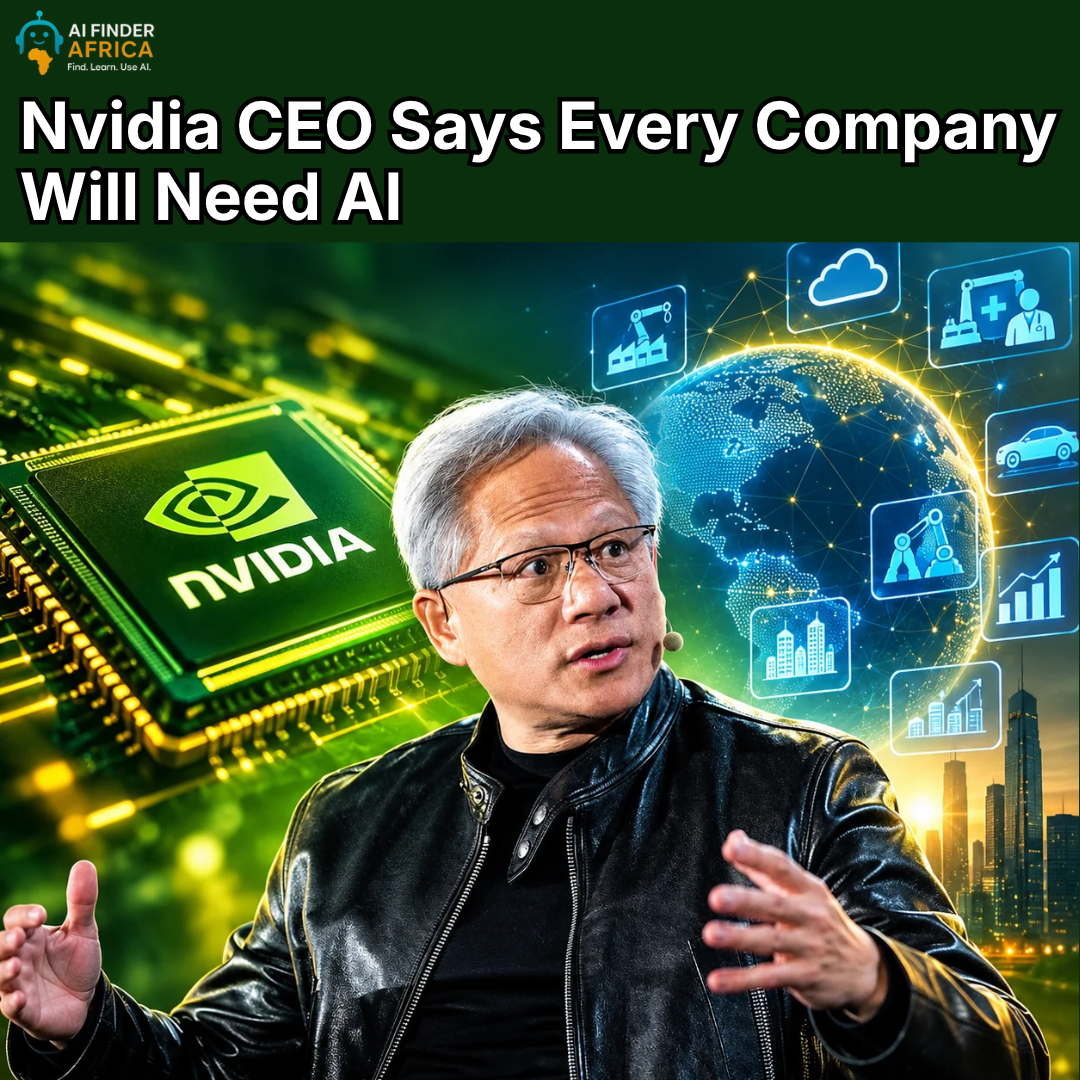
Nvidia CEO Says Every Company Will Need AI

Imagine a future where AI helps a doctor discover new treatments, a car detect danger on the road, a bank analyse financial risks, and a fashion business understand what customers want. That future is already taking shape. And according to Jensen Huang, the CEO of Nvidia, artificial intelligence will eventually become a major part of every company and industry.

China Pushes Back Against US DeepSeek AI Ban

The battle for AI dominance between the United States and China is getting more complicated. This time, the disagreement is not just about who has the better AI model. It is about security, trust, and whether governments are using national security concerns to restrict foreign technology. China has pushed back against a new US government order targeting DeepSeek, one of its most prominent artificial intelligence companies.

Icon Explore

DISCOVER AI TOOLS