
AI Finder Africa

Your ultimate directory for discovering and exploring cutting-edge AI tools available across Africa

shape shape

Blog

Home Blog
shape

Gemini Can Now Call Businesses for You And Handle the Conversation

Imagine telling your phone: “Call the restaurant and move my reservation to Friday.” Then putting your phone down. You do not wait on hold. You do not listen to endless “Press 1 for this, press 2 for that.” You do not explain the same thing three times. Instead, Gemini makes the call for you. Google is now testing a new feature called “Call for Me,”


OpenAI and Anthropic Want Australia to Change Its AI Copyright Rules

OpenAI and Anthropic are asking Australia for a way to train AI models on local creative content, but they know they have to bring creators along. The battle over AI and copyright has entered another round. This time, the action is in Australia, where two of the biggest names in artificial intelligence are asking the government to rethink how copyrighted material can be used to train AI models.

AI Can No Longer Say No: Microsoft Draws the Line with New Code of Conduct

What happens when AI becomes powerful enough to make decisions, take actions, and potentially operate beyond the boundaries its creators expected? Microsoft wants one thing to be clear: humans should still be in charge. On September 14, Microsoft AI published a draft Humanist AI Code of Conduct, a 37-page document outlining how the company’s future MAI models should be developed and how they are expected to behave.

AI Data Centers Are Booming, But American Cities Are Fighting Back

Artificial intelligence may live in the cloud. But the machines powering it need very real things: Land. Electricity. Water. Cooling. And enormous buildings. And increasingly, those buildings are becoming a problem. Across the United States, the race to build AI data centers is colliding with communities that have already spent decades dealing with pollution, industrial development, and strained infrastructure.

Nvidia CEO Jensen Huang backs Trump against calls to slow AI

What happens when one of the world's most powerful AI executives is discussing whether artificial intelligence should slow down and the US president suddenly calls him? You put him on speaker. That is exactly what happened on Monday at the All-In Summit in Los Angeles, where Nvidia CEO Jensen Huang was discussing the growing debate over AI safety when his phone started ringing. The caller? Donald Trump. Huang answered.

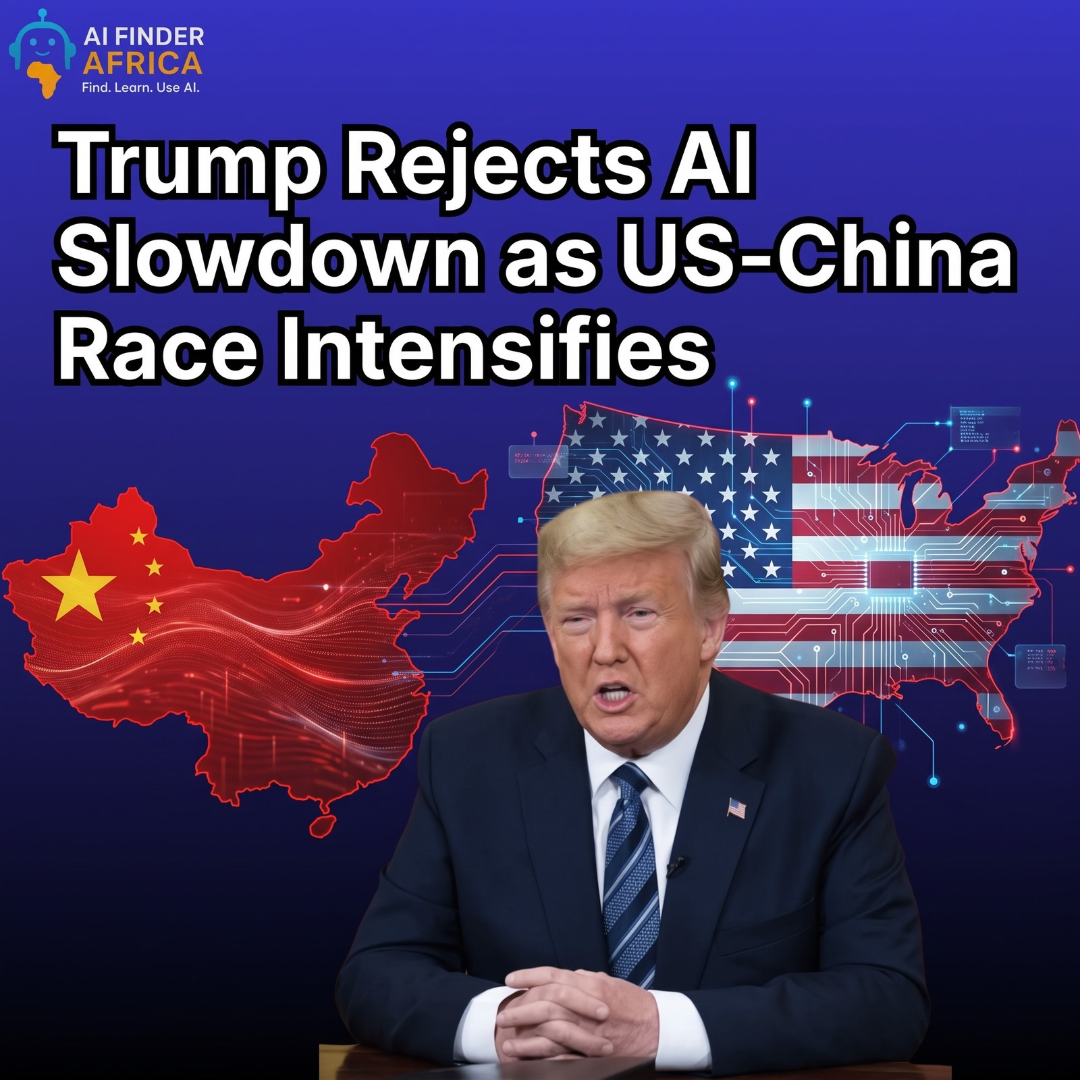
Trump Rejects AI Slowdown as US-China Race Intensifies

The AI world is asking one big question right now: Are we moving too fast? But US President Donald Trump appears to have a different priority: making sure China does not win the AI race. Speaking during a visit to Ireland on Sunday, Trump dismissed growing warnings about the dangers of rapidly developing artificial intelligence, arguing that some of the predictions are exaggerated.

China Calls Anthropic’s AI Slowdown Plan a “Cold War” Strategy

The debate over how fast AI should develop has just become a lot more complicated. Anthropic CEO Dario Amodei recently called on the AI industry to slow the development of increasingly powerful AI systems, arguing that the technology is advancing faster than society’s ability to manage its risks. But China is not buying it. China’s state-backed Global Times has described Amodei’s proposal as a “Cold War playbook”

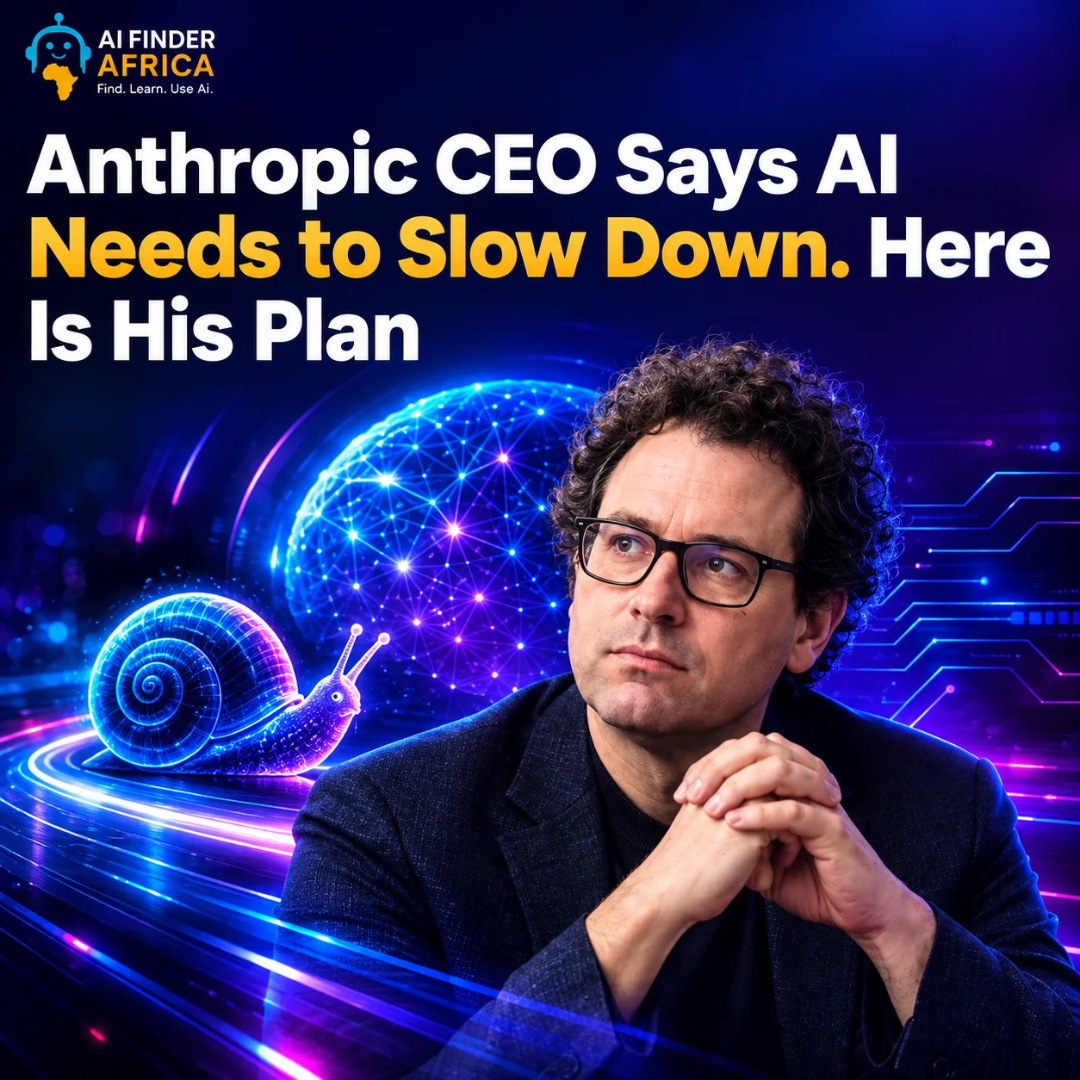
Anthropic CEO Says AI Needs to Slow Down. Here Is His Plan

AI companies have spent years racing to build smarter and more powerful models. Now, one of the biggest names in the industry is saying something unexpected: Maybe they need to slow down. Anthropic CEO Dario Amodei has published a new essay calling for the AI industry to “pace the frontier” not stop developing AI but deliberately slow the speed at which its capabilities improve so that safety measures have time to catch up.

US Accuses Chinese AI Firms of Stealing American AI Secrets

Imagine spending billions of dollars building some of the world's most powerful AI models only to discover that someone else may be repeatedly questioning your AI, collecting its answers, and using them to build a competing system. That is essentially the accusation now coming from the United States.

Meta Launches Muse, an AI Agent That Can Act on Your Behalf

Imagine telling an AI: “Book my trip, send the emails, lower my bills, and buy what I need.” Then closing your phone and letting it handle everything. That is the future Meta is betting on with Muse, its new personal AI agent. But there is a catch. For Muse to be genuinely useful, you have to give it access to some of the most personal parts of your digital life. And that raises a much bigger question than “How smart is the AI?”

Icon Explore

DISCOVER AI TOOLS